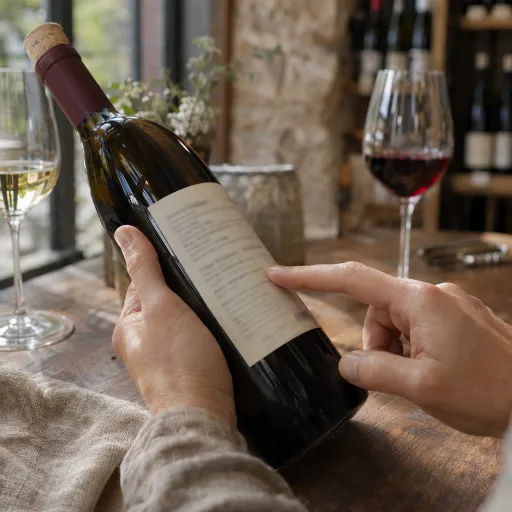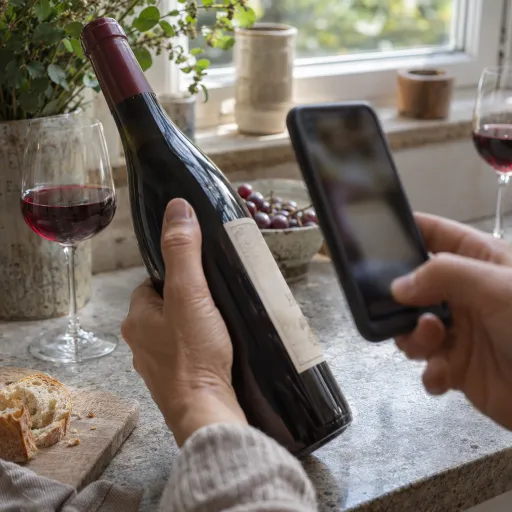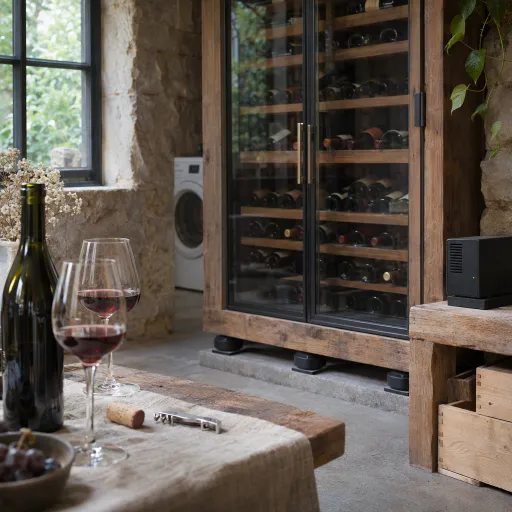
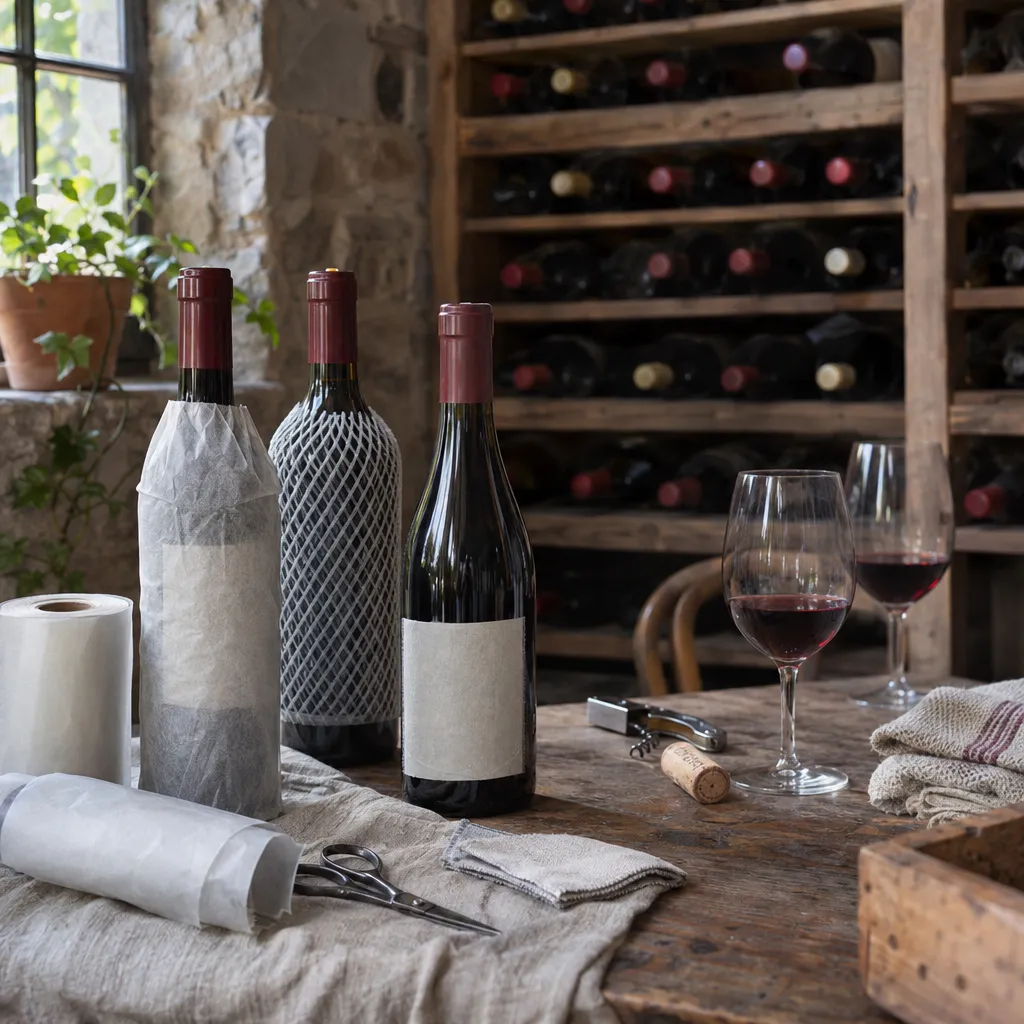
To protect your bottle labels, keep cellar humidity between 60 and 75%, prevent bottles from rubbing against one another, and handle them only when necessary. Above 80% humidity, adhesive fails and mold appears; in tightly packed racks, labels wear each time a bottle is removed. For valuable bottles, tissue paper, plastic wrap, or the original wooden case can make all the difference.
Key Takeaways
- Humidity: 60 to 75%, enough for the corks without being too much for the labels.
- One slot per bottle, label facing up, to prevent rubbing.
- Tissue paper or plastic wrap for fine wines intended for long-term aging.
- A damaged label reduces resale value: it matters for fine wines.
What damages labels in a wine cellar?#
Excessive humidity. Above 80%, adhesive softens, paper buckles, and black mold appears. This is the leading cause of label damage in underground cellars.
Friction. In a rack where bottles are stacked, every bottle removed rubs against the others. Over the years, labels become scratched and torn at the edges.
Condensation. A bottle taken from a cool cellar into a warm room develops condensation, wetting the label. If you return it to a damp cellar, it never fully dries.
Small insects. Silverfish and certain beetles eat the adhesive and paper on labels, especially in damp, poorly ventilated cellars.
WITH VINIOU Snap a photo, and it’s in your wine cellar. Scan the label, Viniou recognizes the bottle instantly.What humidity level protects both corks and labels?#
Corks need humidity to keep from drying out, while labels are vulnerable to it. The right compromise is between 60 and 75%. A hygrometer tells you where your cellar stands. If humidity regularly exceeds 80%, improve ventilation, add a dehumidifier, and remove cardboard boxes, which retain moisture and attract insects. Find the other cellar settings in our wine storage guide.
How should you store bottles to avoid damaging labels?#
Choose individual bottle racks, with one slot per bottle, rather than stacking bottles: you can remove a wine without touching the others. Always store bottles label facing up: you can identify the wine without moving it, and sediment collects on the opposite side. Avoid unfinished metal racks, which rust and stain the paper.
The less a bottle is handled, the better its label will fare. Knowing where each wine is stored saves you from moving ten bottles to find one: Viniou records each bottle's location in your 3D rack layout.
How can you protect valuable bottles?#
| Protection | What it does | Which bottles it's for |
|---|---|---|
| Tissue paper | Prevents rubbing and allows the label to breathe | Fine wines, cellars with normal humidity |
| Plastic food wrap | Protects against moisture and stains | Very humid cellars, long-term aging |
| Clear adhesive label protector | Provides lasting protection for the paper | Bottles to be kept for decades |
| Original wooden case | Protects the whole bottle and establishes provenance | Fine wines purchased by the case |
For fine wines you might one day resell, keep them in their original wooden case, closed: buyers and auction houses look at the condition of the labels and the case, and a damaged label lowers the price.
What should you do with an already damaged label?#
Clean a moldy label with a soft brush, without water, after removing the bottle from an overly humid cellar; do not wet it. A peeling label can be reattached with a very small amount of white wood glue. For fine wines, it is better to do nothing and note the label's condition.
Finding your wines even without a legible label#
A label sometimes becomes illegible, or a back label peels off. If each wine is recorded when it enters the cellar, you will always know what is in the bottle stored at a given location. With Viniou, simply photograph the label on the day of purchase: the wine is recognized and added to your cellar, along with its appellation and vintage. QR code labels on the racks then link directly to the bottles, without having to take them out.
A damaged label doesn't mean losing the information: you can photograph a bottle's label while it is still legible and keep its record in your cellar.
A well-preserved label retains its full value: discover what a wine label tells you about the bottle.
Discover the Viniou app to manage your wine cellar.