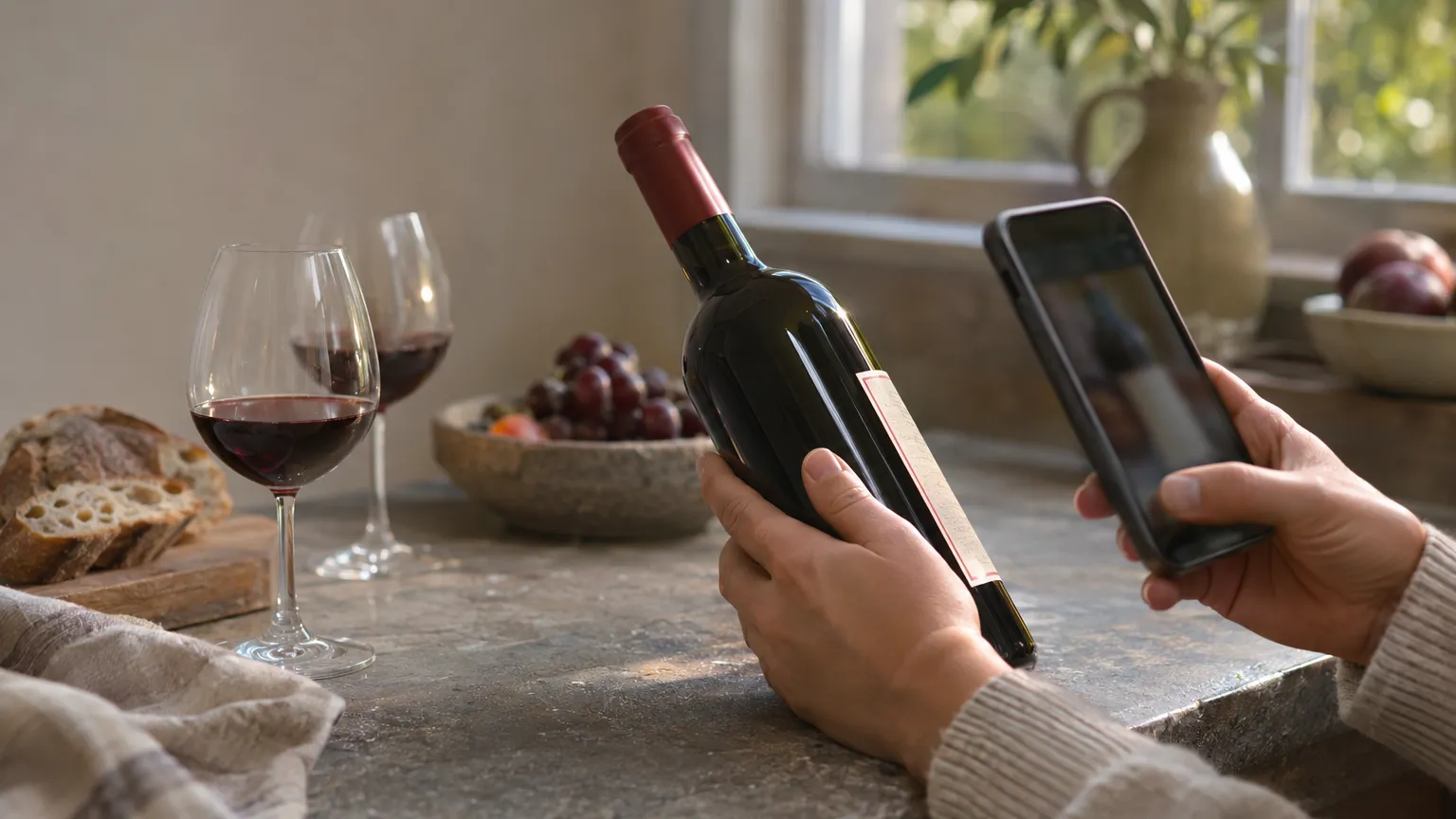
If you’re looking for an app to tell if a wine is good, Viniou is a good choice for bottles you already have at home. With “Label Scan,” you photograph the label, and the wine is identified and added to your cellar. When deciding whether to open it, look beyond a score alone for a recent review of the same vintage that describes a style you enjoy. No scan can guarantee the condition of your bottle.
The essentials
- Check that the review covers the same producer, cuvée, and vintage.
- Before relying on an average score, check how many ratings it includes and which vintages they cover.
- If you like smooth reds, “well-integrated tannins” tells you more than “excellent.”
- When choosing a wine for tonight, rely on the tasting date rather than the review’s publication date.
How can you check that the scan identified the right wine?
Compare the wine’s details with the label: look for the producer’s name, the cuvée name if there is one, and the vintage. The vintage is the year the grapes were harvested, not the year the wine was bottled. If the year isn’t visible in the photo, check the back label too.
The designation “sancerre blanc,” for example, tells you that the wine is made from sauvignon blanc. It isn’t enough to identify the bottle: a producer may offer two cuvées of sancerre blanc in the same year. If a review doesn’t specify which one was tasted, don’t assume it refers to yours.
What does an average score of 4 out of 5 tell you?
First, check whether the score applies to your vintage. An average calculated across several vintages doesn’t tell you how tasters judged yours. Then check the number of ratings: after two scores of 4 out of 5, a score of 1 brings the average down to 3. After a hundred scores of 4, the same rating brings it down to 3.97 out of 5.
In the second case, a single rating carries less weight. The average still doesn’t tell you whether tasters liked the red for its firm tannins or its smoothness. You’ll find that distinction in their comments.
WITH VINIOU Snap a photo, and it’s in your wine cellar. Scan the label, Viniou recognizes the bottle instantly.What words should I look for if I like smooth reds?
“Lovely fruit, but the tannins are still tight”: if you’re choosing a smooth red, pay particular attention to the second part of the comment. The taster is describing astringency, that drying sensation you can feel on your gums. With “well-integrated tannins,” the drying effect is less noticeable. The word “powerful,” on the other hand, doesn’t settle the question: a red can have intense flavors and still feel smooth on the palate.
How do I know if it’s time to open this vintage?
For a 2020 red, “tannins still tight” means something different depending on whether the bottle was tasted in 2022 or last month. A review published yesterday may draw on old notes, so look for the date when the wine was drunk.
If a tasting from the past few months describes softened tannins and still-vibrant fruit in that same 2020 cuvée, that’s a point in favor of choosing this red for dinner. If several recent reviews still describe a firm palate and you’re looking for smoothness, choose another bottle for tonight.
What should you check on the bottle before serving it?
A recommended drinking window doesn’t account for how your bottle has been stored. Prolonged heat can accelerate a wine’s development. If your bottle spent the summer in a hot kitchen, give less weight to the drinking window and examine the neck.
| What you observe | What it may indicate | What to do before the meal |
|---|---|---|
| The wine level is noticeably lower than in other bottles from the same batch. | Some wine may have leaked out. The level alone doesn’t tell you how the wine tastes. | Look for a streak running down from the cork. |
| A streak of dried wine runs down from the cork. | There may have been a leak, but the wine isn’t necessarily spoiled. | Have a backup bottle ready and taste this one first. |
| The level looks normal and the neck is clean. | There’s no visible sign of a leak, but appearance tells you nothing about the aromas. | Taste a small pour before serving everyone at the table. |
By Arnaud Cariou, founder of Viniou
Article written on 11/21/2026