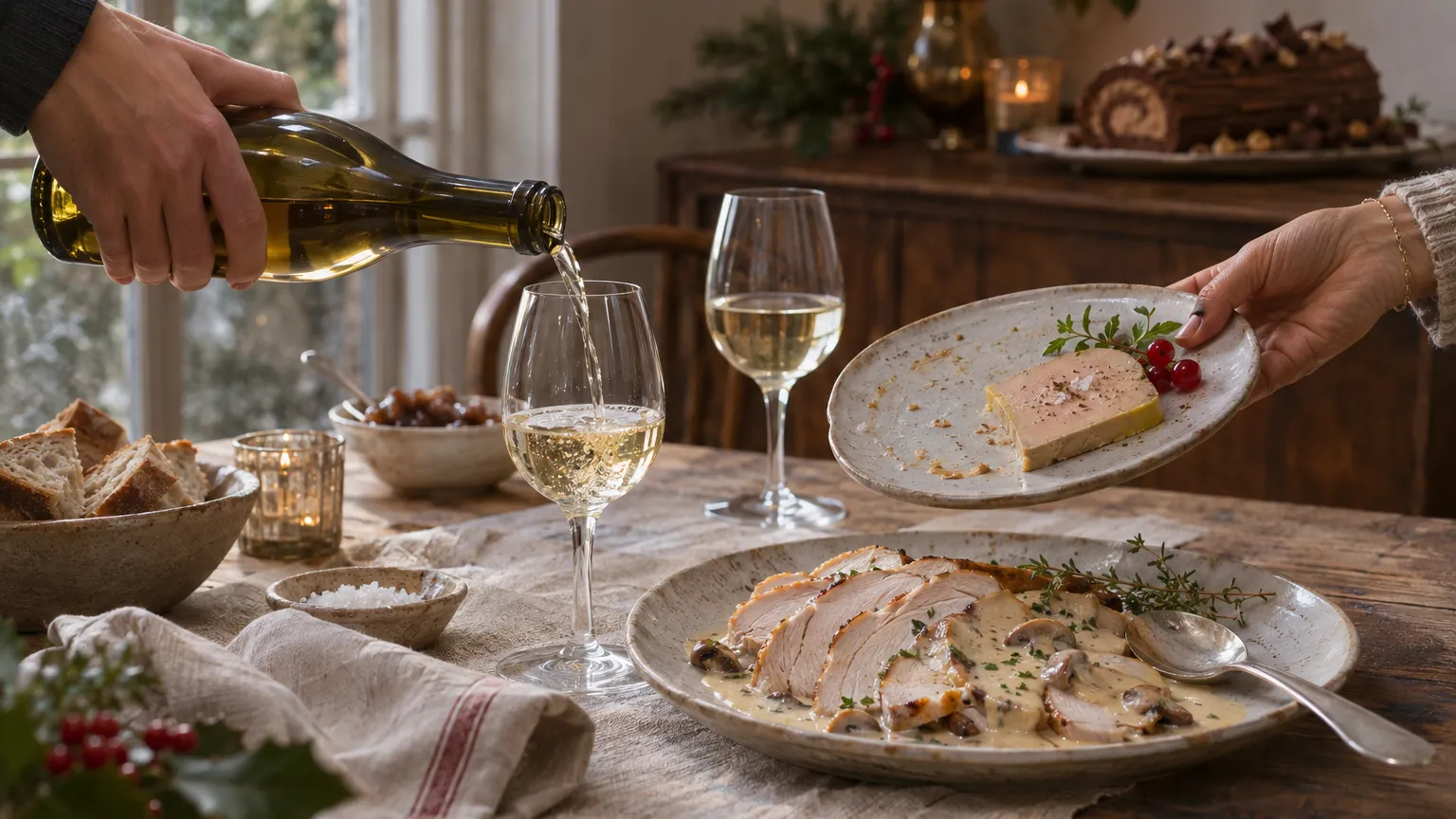
For a foie gras wine pairing, I would choose a vouvray sec if turkey in cream sauce is next: its freshness balances both the richness of the starter and the sauce. With a terrine served with figs, I would prefer a small glass of sauternes, then switch wines for the turkey. For dessert, the yule log’s filling determines the choice: red banyuls for dark chocolate, clairette de Die méthode ancestrale for fruit.
The essentials
- Plain foie gras: if you choose a vouvray, look for “sec” on the label. The appellation name alone is not enough.
- Terrine with figs: serve sauternes at 10 to 12 °C (50 to 54 °F), not ice-cold.
- Roast turkey with chestnuts: choose a pinot noir with supple tannins rather than a red that leaves your mouth dry.
- Fruit yule log: if you want to return to sparkling wine, choose one sweeter than the brut served before dinner.
With foie gras, when should you choose a sweet wine over a dry white?#
With a slice of plain terrine, either approach has merit. A sauternes offers a contrast between the wine’s sweetness and the salt in the terrine. Add a fig compote, and the wine’s sugar also echoes the sweetness of the fruit. Serve sauternes cool, at 10 to 12 °C (50 to 54 °F). At a lower temperature, its aromas are less distinct.
With pan-seared foie gras served without a sweet condiment, I prefer a dry white: after a bite of golden seared foie gras, I enjoy the acidity of chenin more than a sweet sip. In Vouvray, this grape also produces off-dry and sweet still whites. Check the bottle for the word “sec.”
WITH VINIOU The perfect wine for every dish Personalized food & wine pairings for every meal.With turkey, keep the white from the starter or open a red?#
Taste a bite of turkey with its sauce, not just a slice of breast meat. If the turkey is coated in cream sauce, stick with the vouvray sec: its acidity still comes through after the sauce. If you have just served a sauternes, open a dry white instead. A fairly full-bodied white meursault is a good choice for a thick cream sauce.
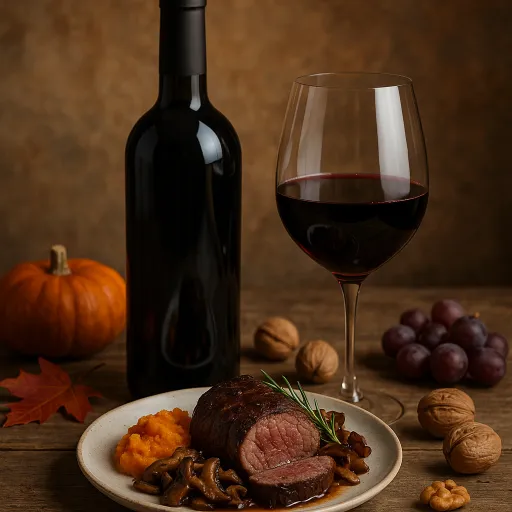
With roast turkey served in its juices or stuffed with chestnuts, you can switch to red. Choose a pinot noir with supple tannins, such as a red bourgogne. The chestnuts give the stuffing substance, but turkey breast is still lean: a red that grips the gums will make the meat seem drier.
Does the sparkling wine served before dinner work with the yule log?#
A brut that is pleasant on its own can taste distinctly acidic after a spoonful of sweet cream. For a pear or peach yule log, choose a clairette de Die méthode ancestrale instead. It retains some of the grape’s sugar. At dessert, it is this sweetness, more than the bubbles, that sets it apart from a brut.
With dark chocolate ganache, serve a red banyuls. The sweetness of this fortified sweet wine softens the bitterness of the cocoa; choose a young one if you enjoy red fruit notes with chocolate. A few chocolate shavings on a pear mousse do not call for the same choice: in that case, stick with the clairette.
Which bottles should you bring out of your cellar for Christmas Eve or New Year’s Eve?#
In Viniou, the “Food and Wine Pairings” feature helps you find a wine among the bottles in your cellar to match a dish. Start with how the turkey is prepared: if you choose a vouvray sec for the cream sauce, you can serve it with the foie gras too. Here are two serving sequences depending on the menu.
| Course | Menu with turkey in cream sauce | Menu with turkey and chestnuts |
|---|---|---|
| Starter | Plain pan-seared foie gras: vouvray sec. | Terrine with figs: a small glass of sauternes. |
| Turkey | Turkey in cream sauce: keep the vouvray. | Turkey stuffed with chestnuts: switch to a red bourgogne with light tannins. |
| Dessert | Pear yule log: clairette de Die méthode ancestrale. | Dark chocolate yule log: red banyuls. |
Discover the Viniou app to manage your wine cellar.