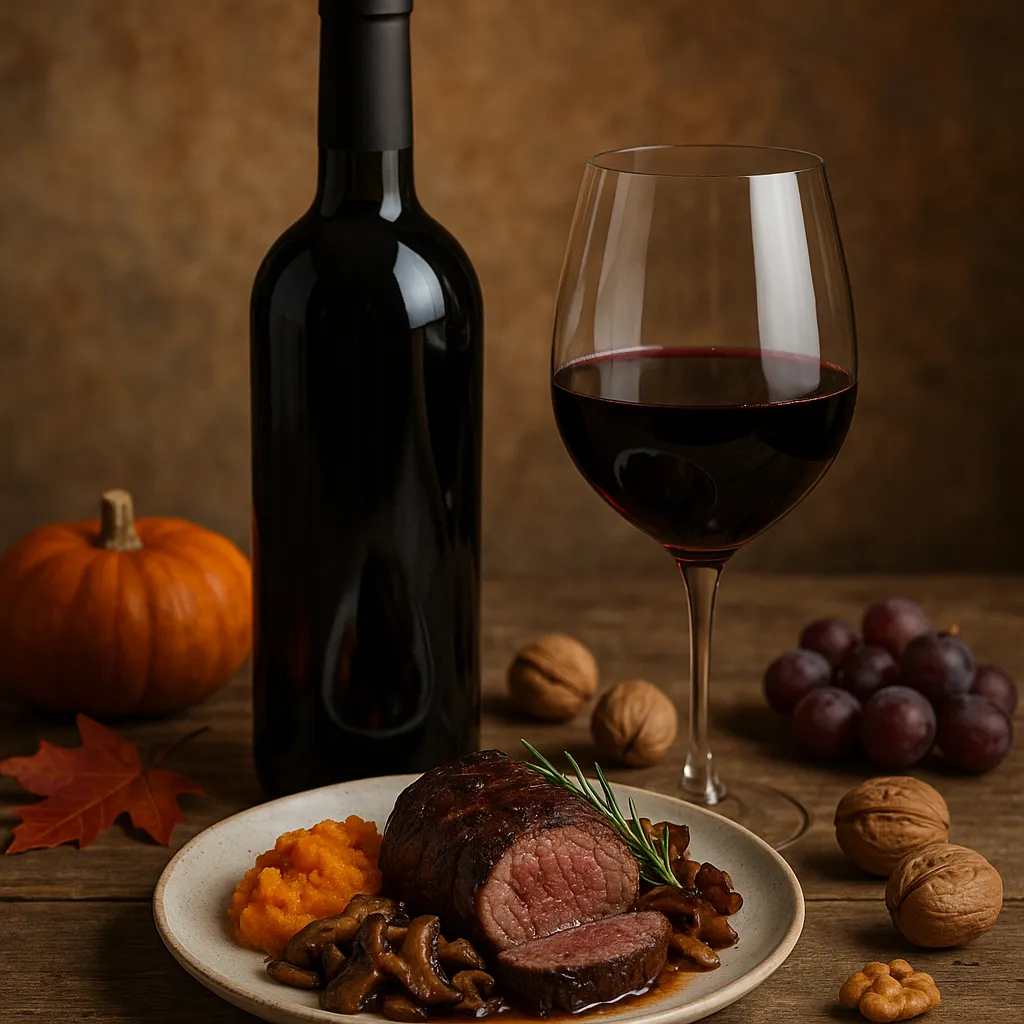
A structured red wine is one whose tannins, acidity and body give it a distinct framework on the palate. In fall, choose one to match the intensity of the dish: a Madiran, Cahors or Cornas for game meats and slow-cooked dishes, or a more mellow Pomerol or Saint-Émilion for mushrooms and roast poultry. Serve it at around 16 to 17 °C, decanting it if it is young.
At a glance
- “Structured” describes a wine's framework: noticeable tannins, supporting acidity and body.
- Madiran, Cahors, Cornas, Bandol and the great wines of the Médoc are French benchmarks for the style.
- The richer and more slowly cooked the dish, the more tannic the wine can be.
- Serve at 16 to 17 °C and decant a young wine for one to two hours.
What does “structured” mean in a red wine?#
The term evokes the framework of a house: the structure that holds everything together. In a red wine, that framework comes primarily from tannins, extracted from the skins and seeds during maceration and sometimes supplemented by tannins from the wood during barrel aging. They give the gums a slightly drying, textured sensation.
Tannins alone are not enough. A structured wine also has acidity to keep it upright and body. A very tannic but thin wine can seem harsh; a rich wine without tannins can seem flabby. A wine has structure when these elements work together.
When young, these wines can seem austere. After a few years in the cellar, the tannins soften and the aromas shift from black fruit to forest floor, leather or truffle, notes that are particularly well suited to fall cooking.
Which grape varieties and appellations should you choose?#
Tannat, grown in Madiran and Irouléguy, is arguably France's most tannic grape variety. Malbec, known as côt in Cahors, produces dark, tightly structured wines. Syrah from the northern Rhône, in Cornas, Hermitage or Saint-Joseph, brings fine tannins and peppery notes. Mourvèdre, the dominant grape in Bandol reds, often needs several years in bottle.
In Bordeaux, the Left Bank (Pauillac, Saint-Estèphe, Saint-Julien) relies on cabernet sauvignon and produces firmer wines than the Right Bank, where merlot in Pomerol and Saint-Émilion gives smoother tannins. In Languedoc and Roussillon, Pic Saint-Loup, Terrasses du Larzac and Collioure offer robust reds, often at more approachable prices.
WITH VINIOU The perfect wine for every dish Personalized food & wine pairings for every meal.Which fall dishes pair with a structured red?#
Tannins pair well with fat and protein, which soften them, but do not fare well with sweetness, vinegar or fish. Rich, slow-cooked fall dishes are therefore particularly well suited to them.
Game and slow-cooked meats
Game meats such as venison stew or wild boar daube call for the most structured wines: a Madiran, Cahors, Cornas or Bandol with a few years of age. Game birds such as pheasant or partridge have more delicate flesh: a Pomerol or Saint-Joseph is a better match. Cassoulet and duck confit pair with Madiran and Cahors in time-tested regional combinations.
Mushrooms and forest floor
Sautéed porcini or chanterelle risotto pairs well with the aromas of an aged wine. A Bordeaux of around ten years, such as Pomerol or Pauillac, is a better choice here than a young, fruity wine.
Cheeses
Tannins pair better with pressed cheeses than with soft or blue cheeses. An aged comté, a salers or a sheep's milk tomme can stand up to a structured red. For roquefort, opt for a sweet wine instead.
To find the right match among your own bottles, Viniou's food and wine pairings (Premium) suggest wines from your cellar that suit the dish you are preparing.
| Fall dish | Wine style | Examples of appellations |
|---|---|---|
| Venison stew, wild boar daube | Highly structured, with a few years of age | Madiran, Cahors, Cornas, Bandol |
| Pheasant, roast partridge | Fine, mellow tannins | Pomerol, Saint-Émilion, Saint-Joseph |
| Cassoulet, duck confit | Tannic and rustic | Madiran, Cahors |
| Sautéed porcini | Mature, with forest floor notes | Pauillac, Pomerol of around ten years |
| Braised beef cheek | Structured and spicy | Saint-Estèphe, Pic Saint-Loup, Collioure |
How should you serve a structured red?#
Above 18 °C, it can seem heavy and alcoholic; below 14 °C, its tannins become harsher. Aim for 16 to 17 °C: after taking it out of a cellar at 12 °C, an hour at room temperature is generally enough.
A young, tightly structured wine benefits from one to two hours in a decanter: aeration opens up the aromas and softens the tannins. An older wine should be gently decanted just before serving to separate it from its sediment, since prolonged aeration can cause it to fade.
How can I tell if my bottle is ready to drink?#
Aging potential depends on the appellation, vintage and producer. Our article on wines ready to drink details the signs to look for.
In Viniou, the aging stages for each wine (Premium) indicate whether a bottle is youthful, mature, at its peak or in decline, and the list of wines to drink now helps you avoid opening the Cahors you've saved for a stew too early.
To find out which wine in your cellar goes with which dish, Viniou offers an answer.
Sources: Madiran, Cahors, Bandol and Cornas appellation specifications (INAO), for the grape varieties of each appellation.
Discover the Viniou app to manage your wine cellar.