Managing a wine cellar without climate control comes down to three things: choosing the coolest, most stable spot in your home, insulating it, and letting air in at the right time. The rest is a matter of organization: open the wines that are most sensitive to heat first. A passive cellar that slowly shifts from 10 °C in winter to 16 °C in summer is perfectly suitable for most wines.
The essentials
- Look for the space with the fewest temperature swings: an underground basement or a spot against a north-facing wall, away from the furnace.
- Insulate the ceiling, exposed walls, and door; cover the windows.
- In summer, ventilate at night and close the openings during the day, with an air inlet near the floor and an outlet near the ceiling.
- Use a min-max thermometer and drink the most delicate wines first.
What temperature is acceptable without climate control?
The benchmark is still 12 °C, but stability matters more than the exact number. A change of 5 or 6 degrees that takes place over several weeks as the seasons shift is not a problem. A swing of several degrees between day and night, however, makes the cork expand and contract, letting in a little air with each cycle.
Above 20 °C for extended periods, wine ages faster and its aromas become heavy. Above 25 °C, it can develop a cooked taste and the cork may push out.
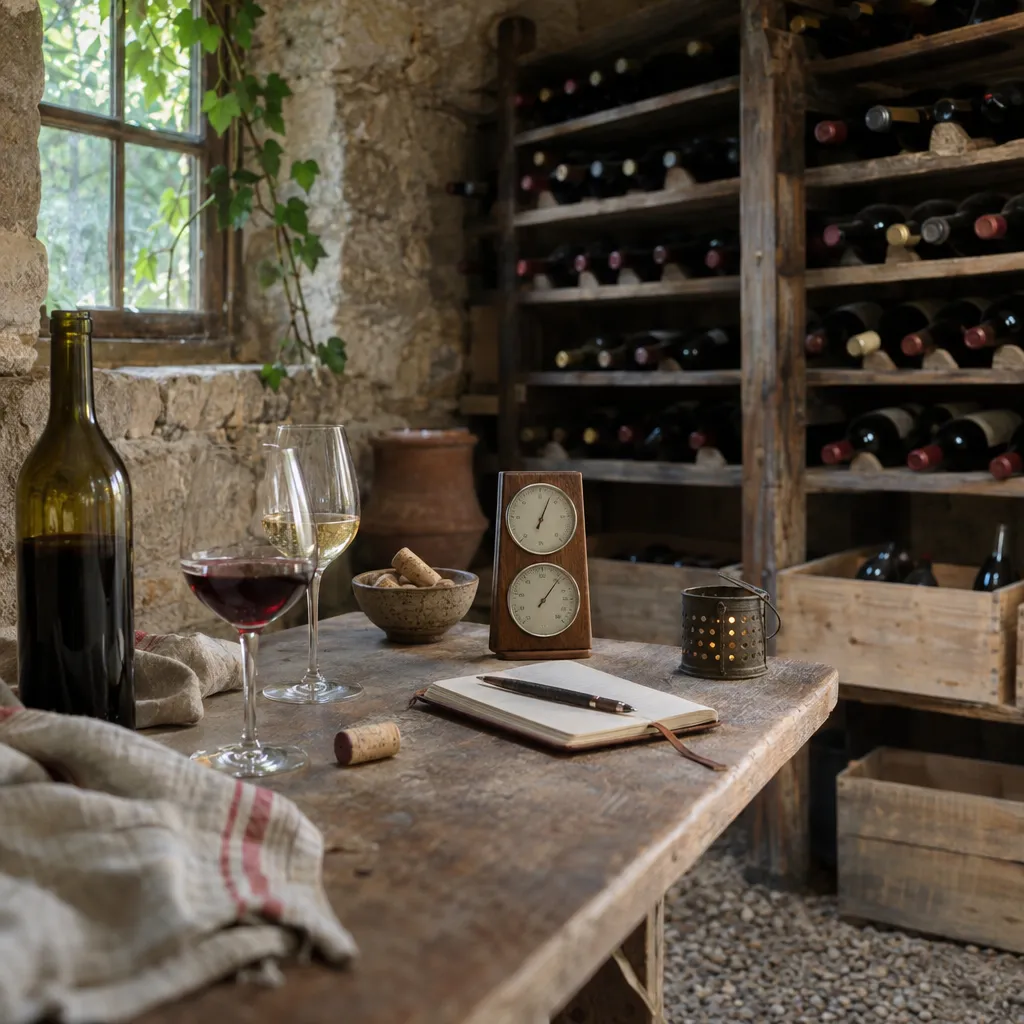
Before making any changes, take measurements. A min-max thermometer placed at bottle height for a full year will tell you whether your cellar is suitable. Our comparison of cellar thermometers can help you choose the right model.
WITH VINIOU A wine expert’s guidance, effortlessly AI-powered tasting, storage, and aging advice.Where should you set up a cellar without climate control?
The best location is an underground basement: the surrounding earth has high thermal mass and moderates the differences between summer and winter. Otherwise, look for a windowless room in the center of your home or a space against a north-facing wall.
Avoid rooms that get hot: the furnace or water heater room, the kitchen, the attic, and a garage with a metal door exposed to the sun. Wrap any heating pipes that run through the cellar in insulating sleeves.
| Location | In summer | In winter | Suitable wines |
|---|---|---|---|
| Underground cellar | Cool | Cool and stable | All wines, including those for long-term aging |
| Windowless room in the center of the home | 18 to 22 °C | Close to the home's heated temperature | Wines to drink within 2 to 3 years |
| North-facing pantry or closet | Varies with insulation | Cool | Medium-term aging if summer temperatures stay below 20 °C |
| Uninsulated garage or attic | Too hot | Too cold | A few weeks only |
How can you insulate a cellar without major renovations?
In a basement, heat comes mainly from above: through the ceiling beneath a heated room and walls facing south or west. Insulation panels attached to the ceiling and these walls are often enough to lower the temperature by a few degrees in summer. Insulate the door too, and install a door sweep to keep warm air out.
A basement window or other window lets in light and heat. Cover it with a removable insulation panel. A well-stocked cellar experiences fewer temperature swings than a nearly empty one, and wooden cases help buffer them further. Cardboard boxes, on the other hand, become moldy in a damp cellar.
How can you ventilate without letting in heat?
Natural ventilation relies on two openings: an air inlet low on one wall and an outlet high on the opposite wall. Cool air enters at the bottom, warm air escapes at the top, and musty odors don't build up. See also our article on choosing a ventilation system.
The approach changes with the season. In summer, close the openings during the day and open them at night, when the outside air is cooler than the cellar. In winter, reduce the openings if the temperature drops too low. Keep an eye on humidity, which should stay between 60 and 80%: a packed-earth floor or a bed of gravel that you moisten helps in a dry cellar, while more ventilation helps in one that is too damp.
Which wines should you drink first in a cellar without climate control?
The most sensitive are whites and rosés made to be enjoyed young, light reds such as gamays, and wines in clear bottles. Tannin-rich reds, sweet wines, and fortified wines such as banyuls or porto are better able to withstand a somewhat warm summer.
If your cellar reaches 18 to 20 °C every summer, your wines will develop faster than usual guidelines suggest. Open them a little earlier and keep purchases intended for very long-term aging in a more stable cellar. Our storage guide covers the right figures for each factor.
Viniou keeps a list of your bottles, their locations in the cellar, and storage advice for each wine. With Premium, you can also see each wine's aging stages and a list of what's ready to drink now.
By Arnaud Cariou, founder of Viniou
Article written on 11/23/2026