

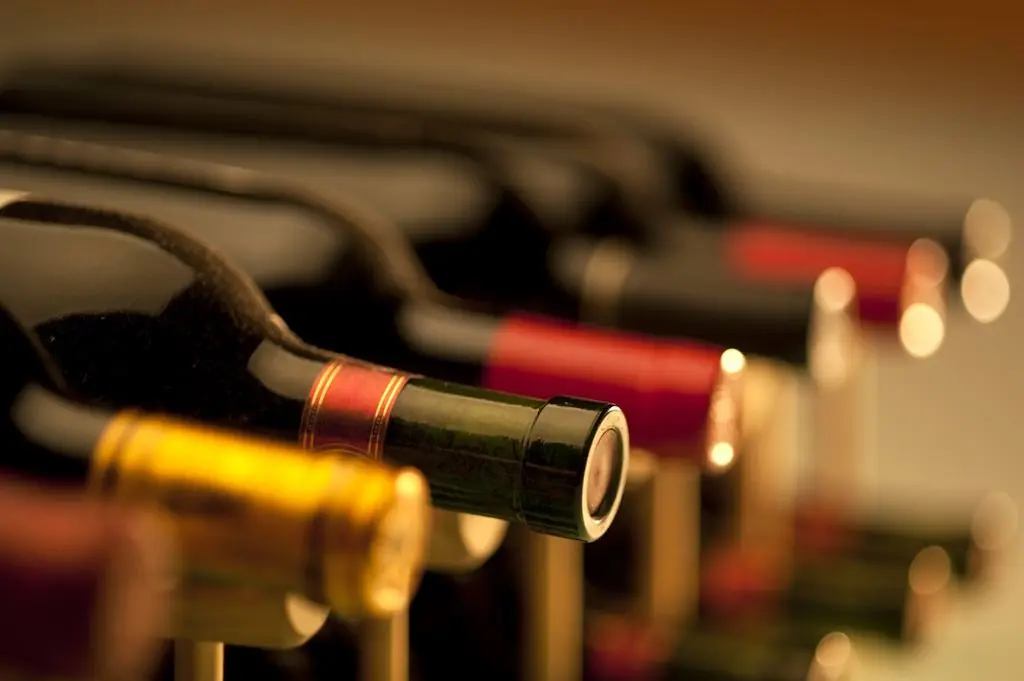
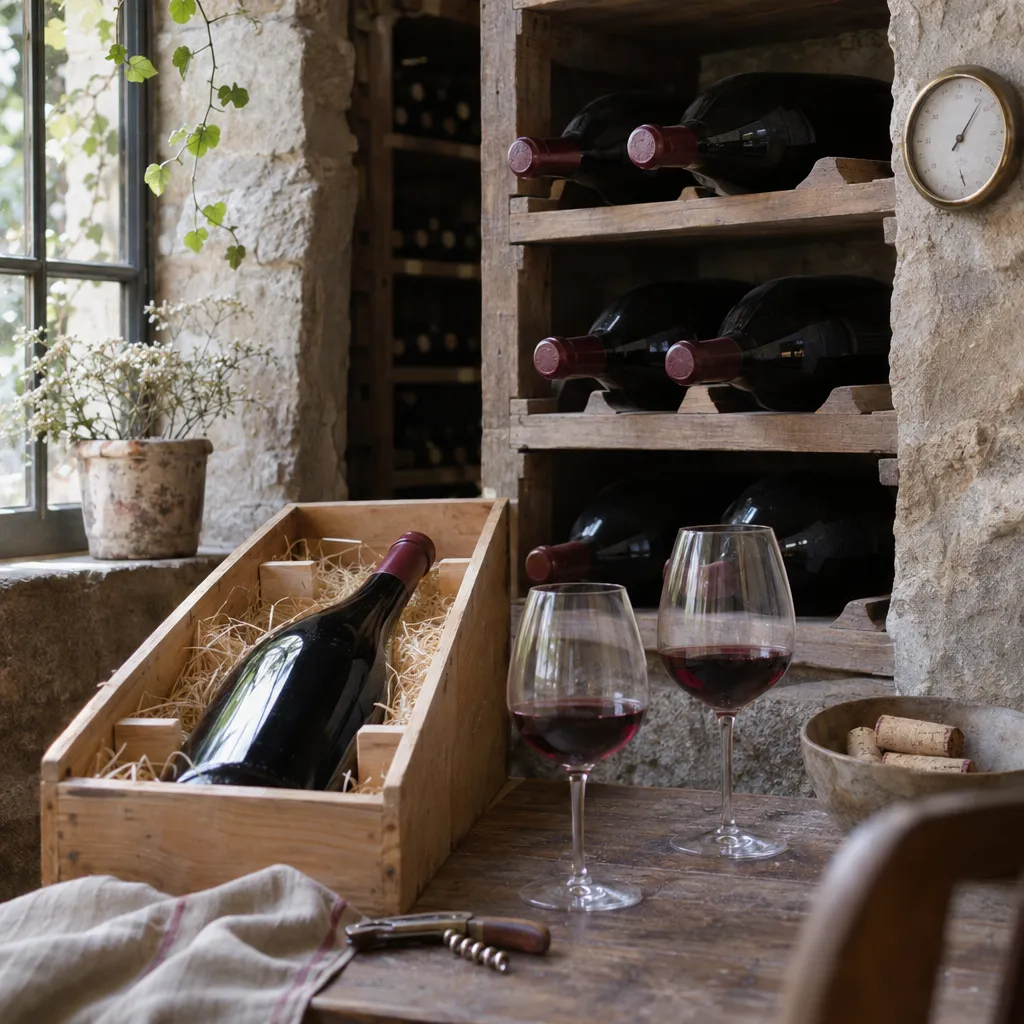
To store wine properly, you need a stable temperature around 54 °F, humidity of 60 to 80%, darkness, a vibration-free environment, and bottles stored on their sides. Stability matters more than the exact number: wine fares better at 59 °F year-round than with an 18 °F swing between winter and summer. This guide covers each point with the right benchmarks and what to do if you don't have a proper cellar.
The essentials
- Temperature: 50 to 57 °F, and above all, no sudden fluctuations.
- Humidity: 60 to 80%, to keep corks from drying out.
- Light: as little as possible, especially for white, rosé and sparkling wines in clear bottles.
- Cork-sealed bottles: on their sides, away from vibrations and strong odors.
What temperature should wine be stored at?
The ideal range is 50 to 57 °F, with 54 °F as a benchmark. Cooler than that, wine develops very slowly; warmer, it ages faster. Above 68 °F for extended periods, its aromas become heavy, and above 77 °F the wine can develop a cooked flavor.
The real danger is temperature swings. As the temperature rises and falls, the wine expands and contracts, the cork shifts, and a little air gets in. A cellar that slowly changes from 52 °F in winter to 61 °F in summer is still acceptable; a room that warms by 14 °F during the day is not.
What humidity should a wine cellar have?
Aim for 60 to 80% humidity. If it's too dry, the cork shrinks and lets air in: the wine oxidizes and the level in the bottle drops. If it's too humid, labels grow moldy and peel off, making it harder to identify or resell a wine.
A hygrometer costing a few euros is enough to check your humidity. In a room that's too dry, a tray of damp sand or wet gravel can help; in a cellar that's too humid, good ventilation and a dehumidifier will solve the problem.
WITH VINIOU A wine expert’s guidance, effortlessly AI-powered tasting, storage, and aging advice.Why keep wine away from light?
Light, especially ultraviolet light, damages wine. White wines, rosés and Champagnes in clear bottles are the most vulnerable: a few days under fluorescent lighting or in the sun can be enough to give them a light-struck fault, with an odor of cabbage or wet cardboard. Store bottles in the dark, and choose a wine fridge with a solid door or UV-protective glass.
Should bottles be stored on their sides?
Yes, for cork-sealed bottles you plan to keep for more than a few months: on its side, the wine stays in contact with the cork, keeping it from drying out. Bottles with screw caps or synthetic corks can stand upright. For short-term storage of a few weeks, position doesn't matter much.
Always keep bottles facing the same way, label up: sediment forms on one side, and you can read the label without moving the bottles.
Vibrations and odors: the hidden enemies
Repeated vibrations from a washing machine, furnace or busy road stir up sediment and take a toll on wine over time. Keep your cellar away from running appliances, and avoid moving bottles unnecessarily.
Strong odors can also eventually affect wine through the cork: paint, fuel oil, household cleaners and damp cardboard. A cellar isn't a storage shed.
Where should you store wine if you don't have a cellar?
| Location | How it measures up | What to watch for |
|---|---|---|
| Underground cellar | The best choice: cool, stable and dark | Humidity, odors, ventilation |
| Wine fridge for aging | Very good: controlled temperature and humidity | Compressor vibrations, UV-protective door |
| Closet in the center of the home | Suitable for a few years | Keep away from radiators and south-facing walls |
| Garage, uninsulated storage room | Risky: hot in summer, cold in winter | Temperature fluctuations |
| Kitchen, attic | Best avoided | Heat, light, odors |
A wine fridge designed for serving keeps wines at drinking temperature; for long-term storage, choose a single-temperature aging fridge set to around 54 °F. If you also want wines ready to serve, a multi-zone wine fridge does both.
How long should you keep a wine?
Even when stored properly, most wines are best enjoyed within the first few years; only some truly benefit from waiting. Here are some guidelines to adjust according to the appellation and vintage.
| Type of wine | Suggested aging time |
|---|---|
| Rosés, light dry whites | 1 to 3 years |
| Light, fruity reds | 2 to 5 years |
| Age-worthy whites (great bourgognes, Loire chenins) | 5 to 15 years |
| Structured reds (Bordeaux, Rhône nord, Bourgogne) | 8 to 20 years or more |
| Sweet wines (Sauternes, Coteaux du Layon) | 10 to 30 years or more |
| Non-vintage Champagne | 1 to 3 years after purchase |
To help you track each bottle, Viniou provides storage advice for every wine in your cellar and, with Premium, its youthful, mature, peak and declining phases, with a reminder when it's time to open it.
Do magnums age better?
Yes. A magnum holds two bottles' worth of wine with roughly the same amount of air beneath the cork: the wine oxidizes more slowly and ages more gradually. It's the preferred format among enthusiasts for wines meant for long aging. The same rules apply: on its side, kept cool and undisturbed. Just make sure you have suitable racks, as magnums won't fit in standard slots.
Unsure about a bottle that may have been damaged? Our article on signs of improperly stored wine helps you assess it before opening. And to help you find every bottle in your cellar, Viniou records its location on your rack layout.
Article written on 11/21/2026