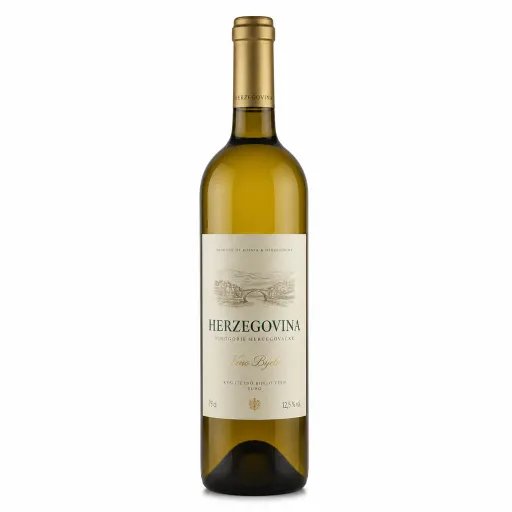
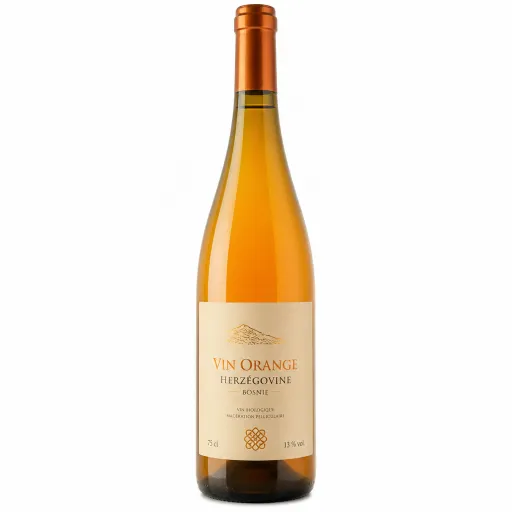
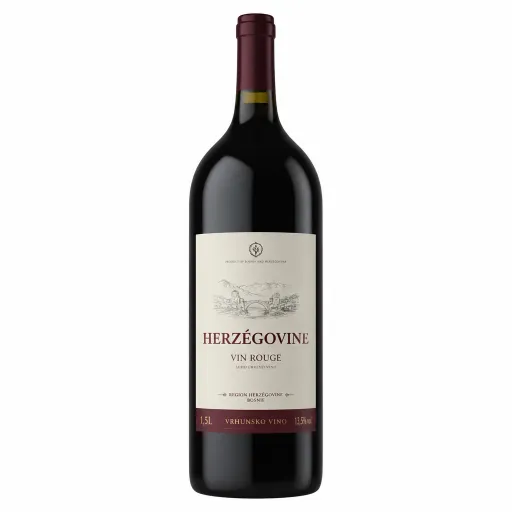
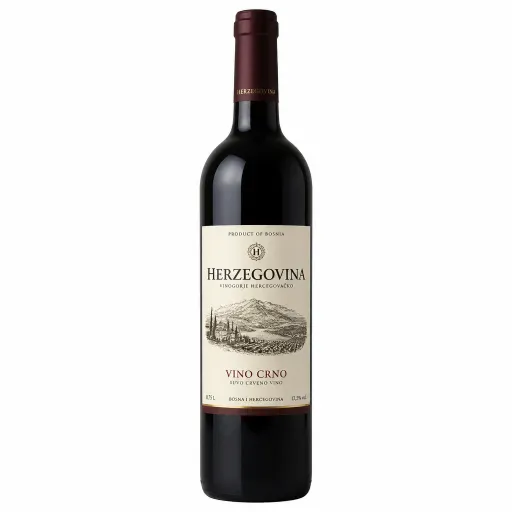
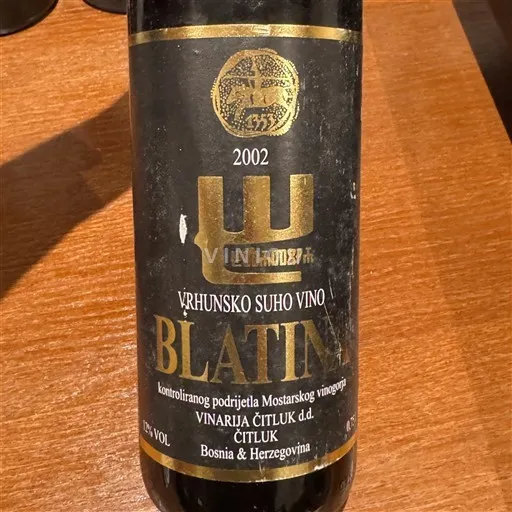
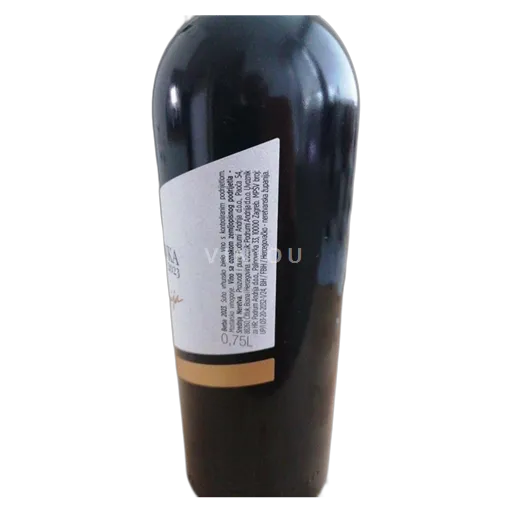
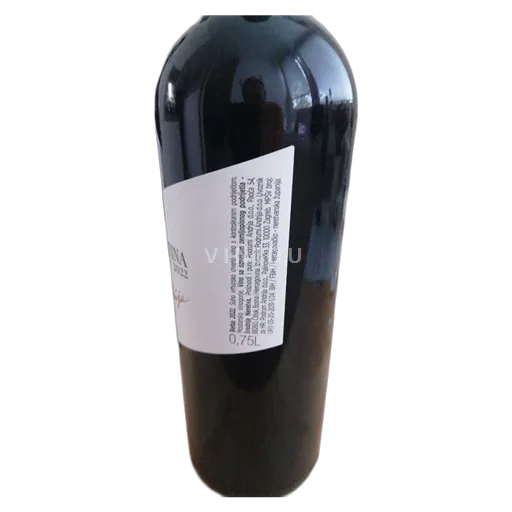
Herzegovina, in the south of Bosnia and Herzegovina, is the country’s main wine-growing region and enjoys a significantly warmer, sunnier climate than the rest of the territory. Partly sheltered by surrounding hills and influenced by the nearby Adriatic, it offers dry summers, mild winters, and often limestone-rich, stony, well-drained soils that are especially well suited to viticulture. Wine production is concentrated around areas such as Mostar, Čitluk, and Međugorje. The identity of Herzegovinian wines is rooted above all in two indigenous grape varieties: Žilavka for whites, valued for its freshness, structure, and notes of citrus, white-fleshed fruit, and sometimes flowers or warm stone; and Blatina for reds, which is softer, spicier, and marked by aromas of dark fruit, garrigue, and plum. Wines are also made from international grape varieties, but the true appeal of the appellation lies in its local heritage. Herzegovinian wines stand out for their sun-driven character, their balance between ripeness and vibrancy, and their excellent pairing potential with Mediterranean cuisine, grilled dishes, and cheeses.