

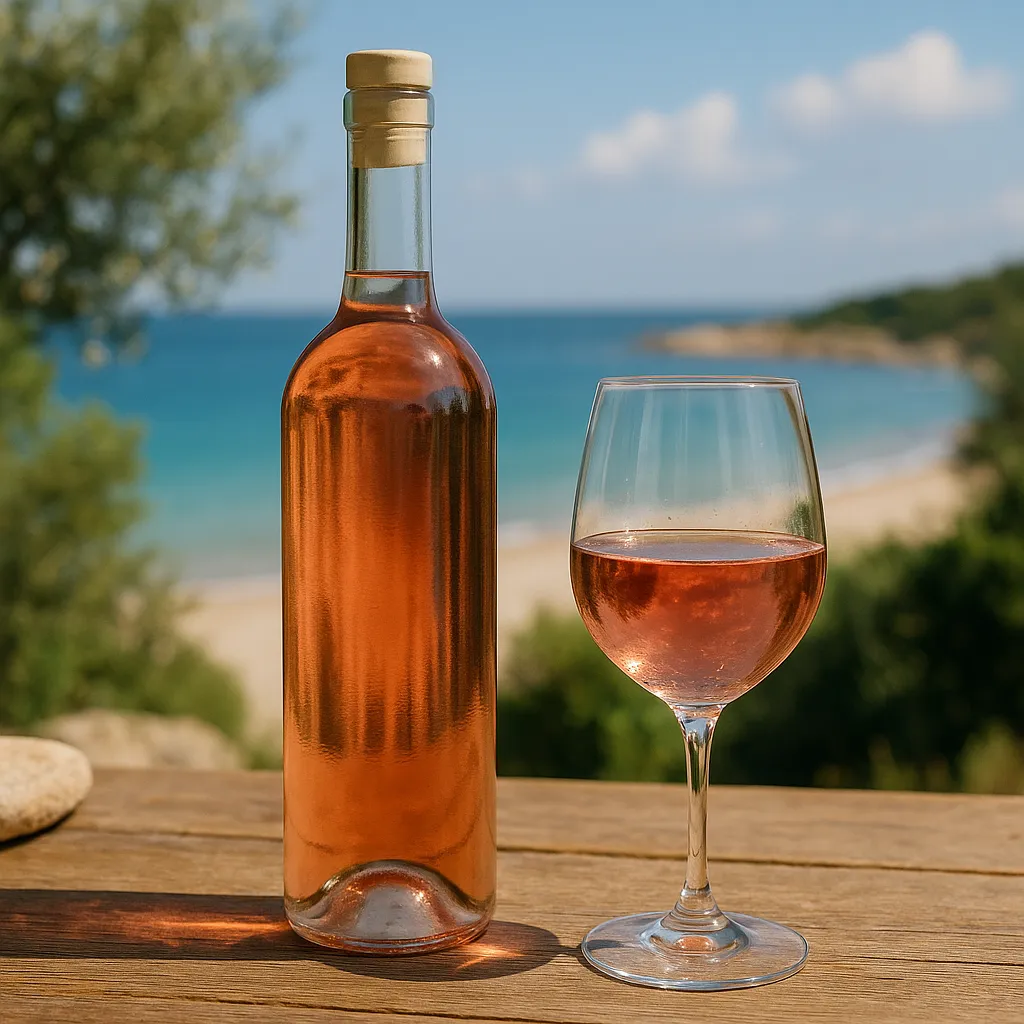
For summer, choose your rosé to suit the occasion: a pale, dry rosé from Provence or Loire for appetizers and salads, a fuller-bodied Tavel or Bandol for grilled foods, or a slightly sweet Cabernet d'Anjou for spicy dishes. Color tells you nothing about sweetness: look to the appellation and the label for guidance.
The essentials
- A pale rosé is not necessarily lighter, nor is a darker rosé necessarily sweeter.
- Choose Provence for finesse, Tavel and Bandol for structure, and Anjou for sweetness.
- Off-dry rosés tame heat; fuller-bodied rosés stand up to barbecue.
- Most are best enjoyed within two years; Tavel and Bandol can age for a few years.
Is a dark rosé sweeter than a pale rosé?
No. A rosé's color comes from the length of time the juice spends in contact with the skins of red grapes, usually a few hours, as well as the grape variety. Sweetness, on the other hand, depends on fermentation: if fermentation runs to completion, the wine is dry, whatever its color. A deeply colored Tavel is dry; a Cabernet d'Anjou, often lighter in color, retains residual sugar.
There are three main ways to make rosé. Direct pressing, in which red grapes are pressed immediately, produces the palest rosés. Short maceration leaves the juice in contact with the skins for a few hours before separating them. Saignée involves drawing off some of the juice from a tank of red wine, producing more deeply colored, fuller-bodied rosés. In Europe, still rosé is not made by blending red and white wine; rosé Champagne is the only exception.
Which regions produce which styles of rosé?
Provence
Côtes de Provence, Coteaux d'Aix-en-Provence and Coteaux Varois produce most of the pale, dry rosés, made from grenache, cinsault and syrah, sometimes with tibouren or rolle.
Tavel and Bandol
Tavel, in the Gard, is an appellation that produces only rosé. Grenache and cinsault yield a deeply colored wine, almost like a light red, that can accompany an entire meal. In Bandol, mourvèdre gives rosé a structure and aging potential that few rosés possess.
Loire
Rosé de Loire is dry and crisp. Cabernet d'Anjou and Rosé d'Anjou are off-dry, with noticeable sweetness. Farther east, Sancerre produces a delicate, mineral rosé from pinot noir.
Corse and other regions
In Corse, sciaccarellu and niellucciu produce rosés that are both elegant and spicy. Languedoc offers generous rosés at affordable prices, Bordeaux its clairet, darker and fleshier, and Bourgogne the rosé of Marsannay, made from pinot noir.
WITH VINIOU The perfect wine for every dish Personalized food & wine pairings for every meal.| Style | Examples | On the palate | Serve with |
|---|---|---|---|
| Pale and dry | Côtes de Provence, Coteaux d'Aix, Rosé de Loire | Light, fresh, citrus | Appetizers, salads, grilled fish |
| Elegant and mineral | Sancerre rosé, Marsannay | Delicate, red fruit | Savory tarts, cold poultry |
| Full-bodied and structured | Tavel, Bandol, clairet | Full, with texture | Grilled foods, charcuterie, Provençal cuisine |
| Off-dry | Cabernet d'Anjou, Rosé d'Anjou | Fruity, slightly sweet | Spicy Asian dishes, red fruit desserts |
| Spicy and Mediterranean | Rosés from Corse | Elegant, notes of wild scrubland herbs | Grilled fish, herb-based dishes |
What should you serve with rosé this summer?
With appetizers
A well-chilled pale rosé from Provence or a Rosé de Loire pairs with tapenade, olives, crunchy vegetables and small fried bites.
At a barbecue
Lamb chops, skewers, grilled sausages: this is where Tavel and Bandol shine, with enough structure to handle fat and smoke.
With salads and southern French cuisine
Salade niçoise, pan bagnat, stuffed tomatoes, grilled peppers or aïoli call for a Côtes de Provence. For bouillabaisse or grilled red mullet, a Bandol rosé is better equipped to hold its own.
With Asian cuisine
The heat of a Thai curry or a chili-spiced stir-fry is intensified by alcohol and softened by sugar. A Cabernet d'Anjou, with its slight sweetness, is a good match here; for spring rolls or sushi, stick to a pale, dry rosé.
To choose among the bottles you already own, Viniou's food and wine pairings (Premium) suggest wines from your cellar that suit your menu. And by recording each rosé you try in your tasting notes, you can find the ones you enjoyed the following summer.
How long can you keep rosé?
Most rosés are made to be enjoyed young, within one to two years of harvest, when their fruit is at its peak. The more structured rosés of Tavel and Bandol can age for three to five years and sometimes gain complexity.
Serve pale rosés at 8 to 10 °C and fuller-bodied ones at 10 to 12 °C: served too cold, a Tavel loses its aromas. For tips on chilling it quickly, transporting it and keeping your bottles away from heat, our guide to wine in summer brings together the best practices.
Article written on 7/28/2025 · Updated on 11/21/2026