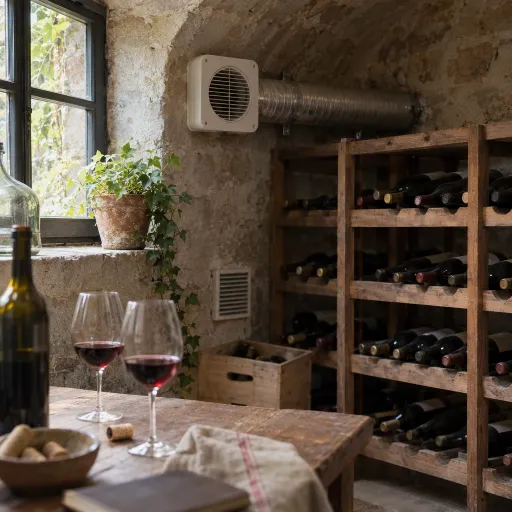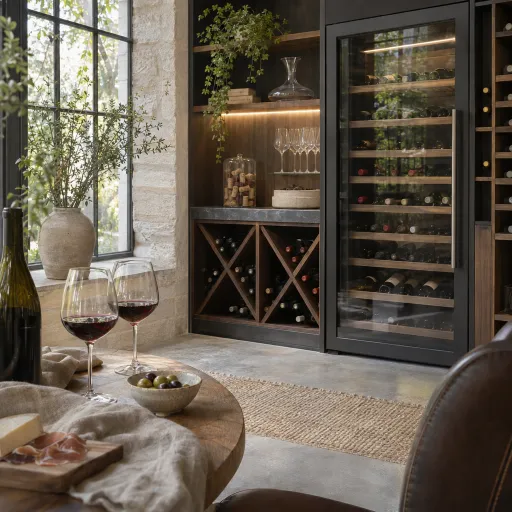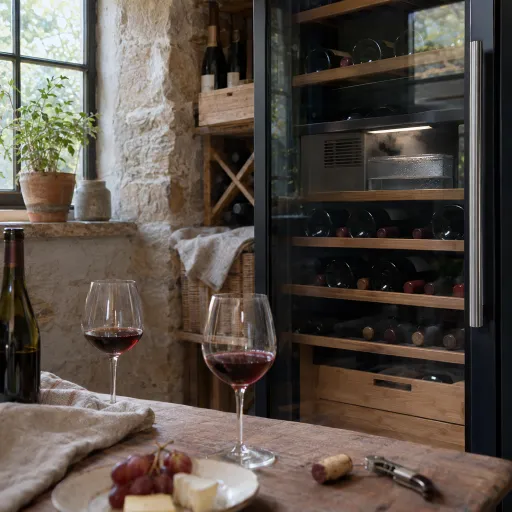
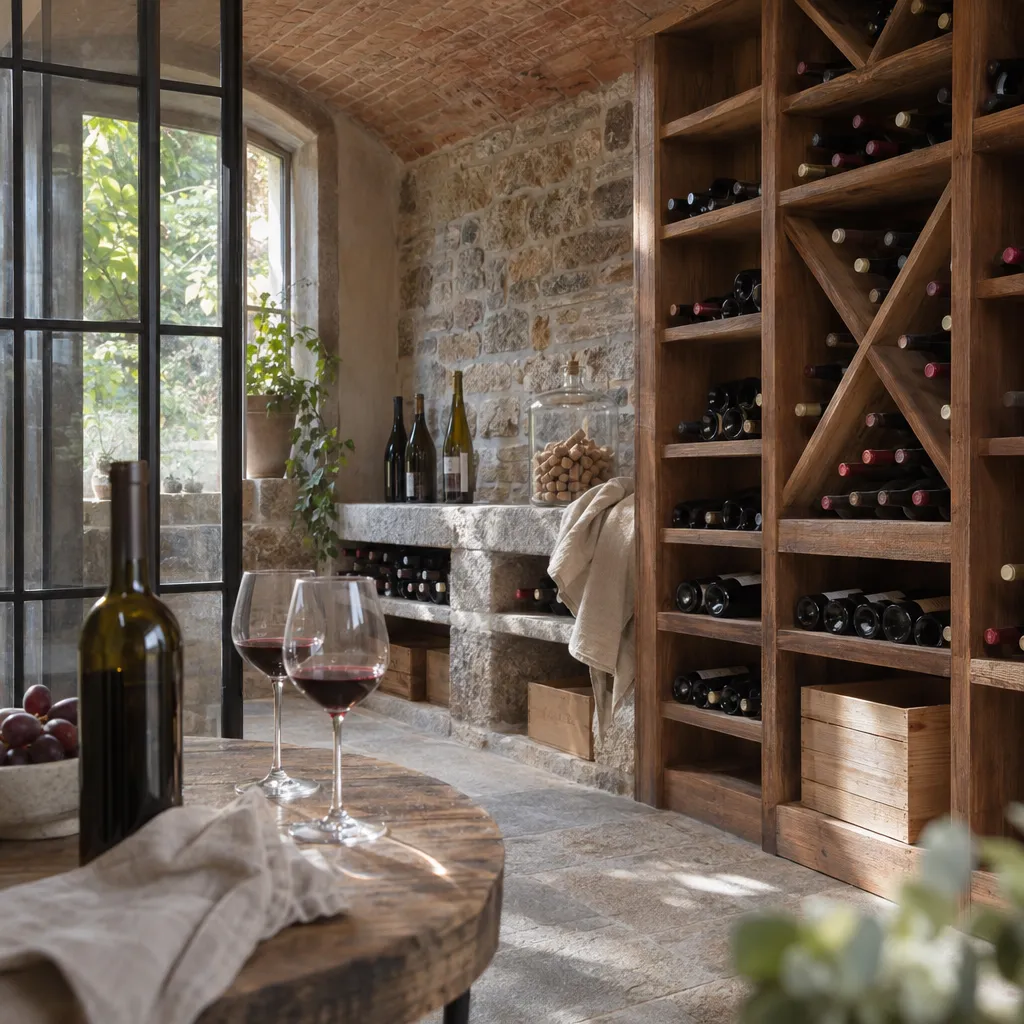
When building a wine cellar, choose unfinished materials that withstand humidity and give off no odors: untreated wood, galvanized or powder-coated metal, terracotta, stone or concrete. Avoid particleboard, varnishes and solvent-based paints. Materials matter beyond the racks, too: choose breathable floors and walls, insulation if the cellar is not underground, a solid door and lighting that produces little heat.
Key Takeaways
- Racks: moisture-resistant unfinished wood, rust-protected metal, or terracotta and concrete.
- Avoid: particleboard, ordinary plywood, treated or varnished wood, and anything that gives off an odor.
- Floors and walls: materials that allow moisture to pass through, such as gravel, terracotta or lime plaster.
- LED lighting and a solid, insulated door.
What material should you choose for wine racks?
Unfinished wood
Wood is the most common material and the most pleasing to the eye. Choose unfinished, untreated and unvarnished wood so it does not transfer odors to the wine through the cork. Species that resist moisture well are the safest choices: oak, chestnut, black locust (acacia) and red cedar. Pine and spruce are suitable for a sound, well-ventilated cellar, but do not age as well in a very humid one.
Metal
Whether made from steel wire or sheet metal, metal racks are slim and sturdy and can hold many bottles in a small space. They should be galvanized, powder-coated or made of stainless steel: bare steel rusts quickly in a humid cellar and stains labels. This is the most modern choice, often used for display walls of bottles.
Terracotta, stone and concrete
Terracotta flue liners, brick masonry racks and concrete bottle compartments have high thermal mass: they retain cool temperatures and regulate humidity. They are heavy, permanent and require a sturdy floor, but they last a lifetime. This is the traditional solution for underground cellars.
Materials to avoid
Particleboard and MDF swell in damp conditions and contain glues that give off odors. Pressure-treated wood and wood finished with varnishes or solvent-based paints can smell for months. Original cardboard boxes are convenient for short-term storage, but they grow moldy in a humid cellar and attract insects.
WITH VINIOU Keep an eye on every bottle Entries, exits, and virtual cellar at a glance.Material comparison
| Material | Advantages | Limitations | Best for |
|---|---|---|---|
| Unfinished wood (oak, chestnut, black locust) | Warm appearance, odor-free, easy to assemble | Softwoods are vulnerable to excessive moisture | All cellars |
| Galvanized or powder-coated metal | Slim, sturdy, high capacity | Rusts if untreated | Modern cellars, small spaces |
| Terracotta, brick, concrete | Thermal mass, regulates humidity, durable | Heavy, permanent | Underground cellars |
| Particleboard, MDF, varnished wood | Inexpensive | Swells, gives off odors, damages wine | Avoid |
What floors and walls are best for a cellar?
A cellar needs to maintain 60 to 80% humidity. A packed earth or gravel floor is ideal: it naturally regulates humidity, and you can sprinkle it lightly with water in summer if the cellar becomes too dry. Terracotta tiles and unfinished concrete are also suitable. Impermeable tile or resin flooring prevents ground moisture from rising and dries out the cellar.
For walls, let them breathe: exposed stone, brick or lime plaster. Avoid impermeable plastic-based paints, which trap moisture behind them and eventually blister and grow mold.
Should you insulate your cellar?
An underground cellar often needs no insulation: the surrounding earth keeps it cool. A cellar built in a shallow basement, garage or room, on the other hand, needs insulation to maintain a stable temperature. Common insulation materials include extruded polystyrene, expanded cork and wood fiber. Install a vapor barrier on the warm side of the wall to prevent condensation in the insulation, and insulate the ceiling if there is a heated room above.
Door and lighting
The door should be solid and insulated, with a seal around its perimeter: it is often where heat enters. We explain how to choose one in our article on wine cellar doors.
For lighting, choose LEDs: they produce very little heat and emit virtually no ultraviolet light. Avoid halogen lights, which produce heat, and fluorescent lights, which emit UV. A motion sensor or timer ensures the lights do not stay on.
Your cellar layout on your phone
Once the racks are in place, record where each bottle is located. Viniou displays your cellar and its racks in 3D: each wine has its own location, and QR code labels attached to the racks link directly to the bottles they contain. For temperature and humidity settings, see our wine storage guide.
By Arnaud Cariou, founder of Viniou
Article written on 11/27/2026