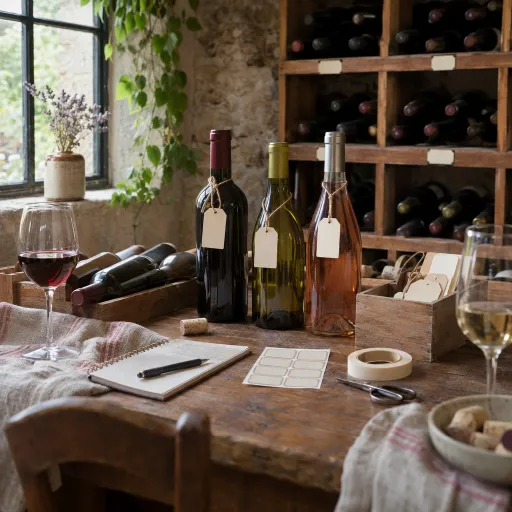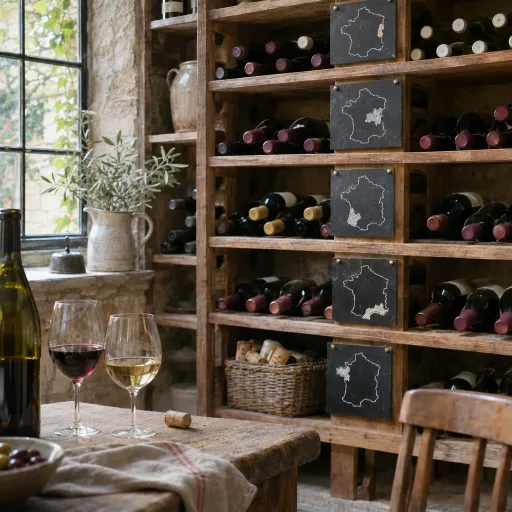
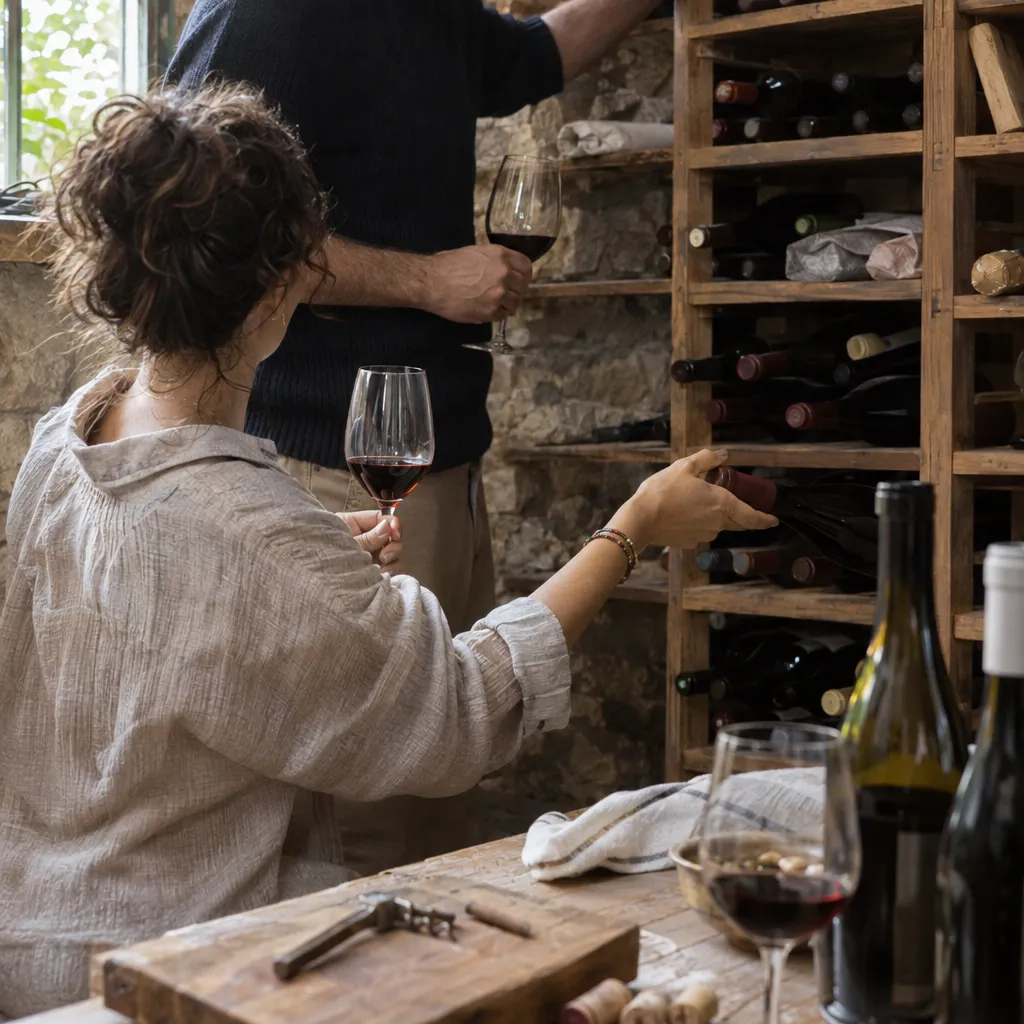
A shared cellar works when everyone knows who owns each bottle, records what they take, and checks the same inventory. Without these three rules, the same problems keep coming up: a bottle saved for a birthday gets opened on a Tuesday night, purchases are duplicated, and people argue over who paid for what. A simple system and a tool everyone can access from their phone are enough to avoid them.
The essentials
- Decide from the start whether bottles are shared or individually owned.
- Whoever opens a bottle records it immediately.
- Bottles saved for an occasion are clearly marked.
- One inventory everyone can access is better than separate lists.
Who shares a wine cellar?
It's more common than you might think: a couple combining their bottles, a family with a cellar at a vacation home, friends buying together en primeur or at a winery, siblings who have inherited their parents' cellar, roommates, an association, or a tasting club. The rules vary a little from one situation to another, but the problems are always the same.
Who owns the bottles?
This is the first question to settle, before it becomes an issue. Two approaches work:
- A shared cellar: The bottles belong to everyone and are purchased with a shared budget. A simple option for a couple or family.
- A cellar with individual owners: Each bottle belongs to someone, even though everything is stored together. Essential among friends, in a jointly owned cellar, or in an association: record the owner and purchase price of each wine.
A mixed approach works too: a shared supply of everyday wines, plus a few clearly identified personal bottles.
WITH VINIOU Manage your wine cellar with Viniou Know what’s in your cellar, where your bottles are, and when to drink them, on iPhone, Android, and computer.Rules that prevent disputes
| Rule | Why |
|---|---|
| Record every bottle taken out immediately | The inventory stays accurate, and no one looks for a bottle that's already been drunk |
| Mark reserved bottles | The wine saved for a wedding or birthday isn't opened by mistake |
| Decide together when to open great wines | A valuable bottle is opened with the agreement of its owner or owners |
| Discuss purchases | No duplicate purchases, and the budget stays on track |
| Use a storage system everyone knows | Everyone can find wines without moving everything around |
How should you organize a shared wine cellar?
Keep the layout simple enough for everyone to understand: organize by color, then by region, and label each rack. In a cellar with individual owners, set aside an area for each person or mark personal bottles. Keep wines to drink first within easy reach, and ageworthy wines at the back or on the bottom, where it's coolest.
What tool should you use for a shared inventory?
A notebook kept in the cellar is useful only to those on site, and it's never up to date. A shared spreadsheet can be accessed remotely, but no one fills it in while standing in front of the cellar. Ideally, keep an inventory on your phone and update it as you take out a bottle.
With Viniou, a couple or family can use the same cellar on multiple phones and on a computer: everyone can add and remove bottles, and everyone sees the same inventory. To show others your cellar without giving them control, cellar sharing creates a private, read-only link that updates with your inventory and expires when you decide. Without a subscription, the link shows a preview of five wines; with Premium, it shows the entire cellar. Each wine has its location on the rack layout, and QR code labels let you find a bottle by scanning it.
What if you part ways?
Whether a couple separates, friends stop buying together, or a cellar is inherited, an up-to-date inventory with the owner and purchase price of each bottle makes dividing it simple. For a valuable cellar, the estimated value of each bottle, available with Viniou Premium, provides an objective basis for dividing the wines.
By Arnaud Cariou, founder of Viniou
Article written on 11/24/2026