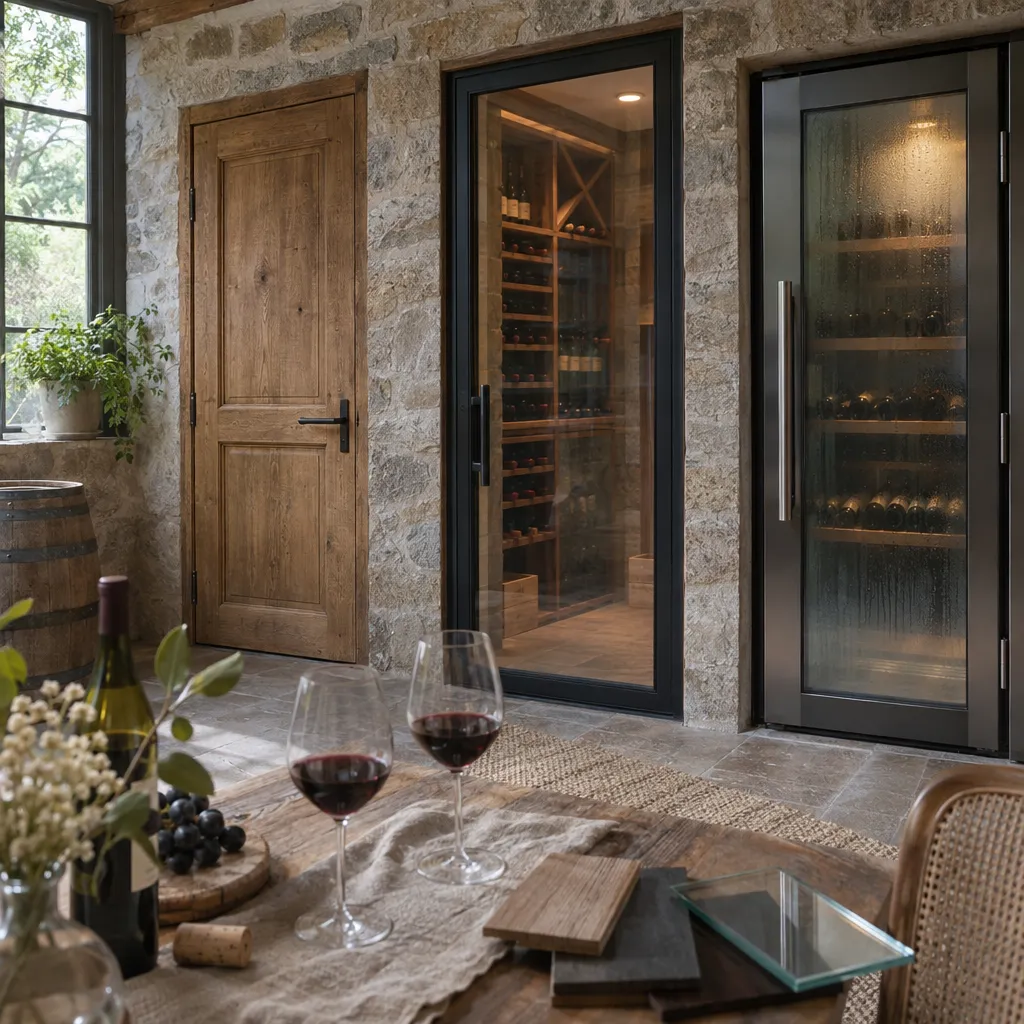
A cellar door must first and foremost insulate and seal tightly: it is the most common entry point for heat, light and dry air. A solid, insulated door with weatherstripping around the entire frame and a threshold that seals the bottom is suitable for almost any cellar. Choose the material to suit the style and use: solid wood for a traditional cellar, insulated metal for security, or double-pane UV-protective glass to showcase your bottles without exposing them.
The essentials
- A solid, insulated door, never a hollow-core interior door.
- Weatherstripping on three sides and a threshold or automatic door bottom.
- Glass doors: double- or triple-pane glass with a UV filter.
- A lock whenever the cellar contains valuable wines.
Why does the door matter so much?
In an underground cellar, the walls keep the space cool; the door is the weak point. A poorly insulated door lets warm air in from the house or garage, causing temperature fluctuations and drying out the cellar. A door that does not seal properly also lets in light and odors. The right door keeps the cellar stable without adding to running costs.
Insulation and airtightness: the two key criteria
Insulation. A solid wood door at least 40 mm thick, or a door with an insulating core such as polyurethane foam or cork, slows heat transfer. A standard, lightweight hollow-core interior door provides almost no insulation: it is the most common mistake.
Airtightness. Use rubber weatherstripping on the frame on all three sides, and an automatic door bottom or threshold to close the gap beneath the door. Warm air often enters through this gap, even when it is only a few millimeters wide.
WITH VINIOU Keep an eye on every bottle Entries, exits, and virtual cellar at a glance.Which type of door should you choose?
Solid wood door
The traditional choice has a warm look and insulates well if it is thick enough. Choose a moisture-resistant wood such as oak or chestnut, and an oil finish rather than varnish: in a humid cellar, varnish flakes and unfinished wood breathes better.
Insulated metal door
A steel door with an insulating core combines insulation and security. It resists moisture if it is galvanized or powder-coated. It is a solution for cellars containing valuable wines and often comes with a multipoint lock.
Glass door
A glass door showcases the collection, especially when the cellar is built into a living space. It must have double- or triple-pane glass for insulation and a UV filter, because light damages wine. Keep the cellar lights off except when visiting.
Thermal door
Inspired by walk-in cooler doors, this very thick, perfectly airtight door is designed for a climate-controlled cellar: it retains the cool air produced by the cooling unit and reduces its energy consumption.
Comparison table
| Door | Insulation | Advantage | Best for |
|---|---|---|---|
| Thick solid wood | Good | Warm, traditional look | Underground cellar |
| Metal with an insulating core | Very good | Security, moisture resistance | Valuable wines |
| Double- or triple-pane UV-protective glass | Fair | Showcases the collection | Cellar in a living space |
| Thermal | Excellent | Completely airtight | Climate-controlled cellar |
| Hollow-core interior door | Very poor | Inexpensive | Avoid |
Do you need a lock?
Yes, whenever the cellar contains valuable wines: a lock, or even a security door, protects against theft and reassures your insurer. Also keep a list of your bottles and their value: that is what the insurer will ask for in the event of a burglary. In Viniou, each bottle is recorded with its location, and Premium estimates the value of your cellar.
What about the rest of the cellar?
The door cannot do everything. To keep a cellar stable, you also need gentle ventilation, well-insulated walls and lighting that does not give off heat. Our articles on cellar construction materials and ventilation complement this choice.
By Arnaud Cariou, founder of Viniou
Article written on 11/25/2026