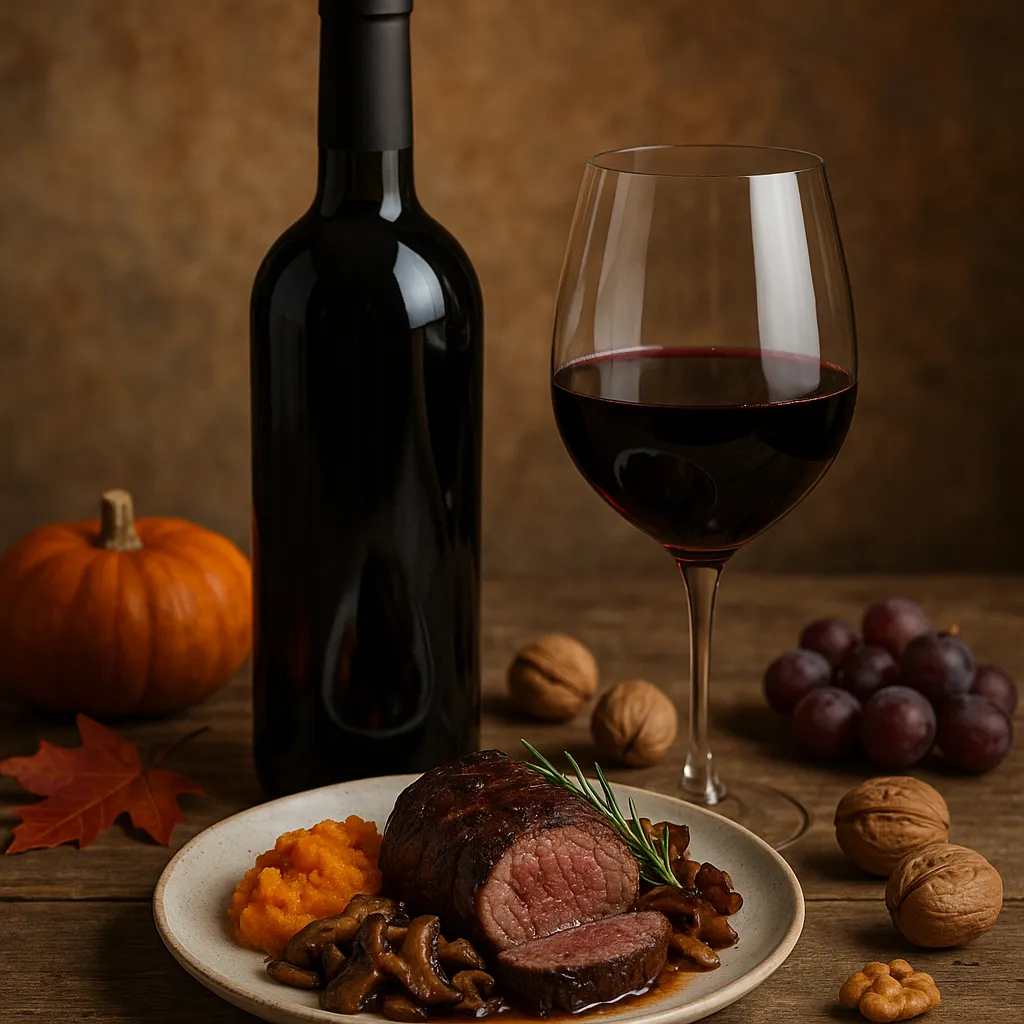
A structured red wine is one whose tannins, acidity, and body combine to give it a distinct framework on the palate. In fall, choose one to match the intensity of the dish: a Madiran, Cahors, or Cornas for venison, wild boar, and slow-cooked dishes; a more mellow Pomerol or Saint-Émilion for mushrooms and roast poultry. Serve it at around 16 to 17 °C, decanting it if young.
Key Takeaways
- "Structured" describes a wine's framework: noticeable tannins, supporting acidity, and body.
- Madiran, Cahors, Cornas, Bandol, and the great Médoc wines are French benchmarks for this style.
- The richer and more slowly cooked the dish, the more tannic the wine can be.
- Serve at 16 to 17 °C and decant a young wine for one to two hours.
What Does "Structured" Mean for a Red Wine?
The term evokes the framework of a house: the structure that holds everything together. In a red wine, that framework comes first from tannins, extracted from the skins and seeds during maceration and sometimes supplemented by tannins from oak during barrel aging. They create a slightly drying, grainy sensation on the gums.
Tannins alone are not enough. A structured wine also has acidity to keep it lively, as well as body. A very tannic but thin wine seems harsh; a rich wine without tannins seems flabby. Structure is the result of these elements working together.
These wines can seem austere when young. After a few years in the cellar, the tannins soften and the aromas evolve from dark fruit to forest floor, leather, or truffle, notes that are especially well suited to fall cooking.
Which Grapes and Appellations Should You Choose?
Tannat, grown in Madiran and Irouléguy, is arguably France's most tannic grape. Malbec, known as côt in Cahors, produces dark, tightly structured wines. Syrah from the northern Rhône, in Cornas, Hermitage, or Saint-Joseph, brings fine tannins and peppery notes. Mourvèdre, the dominant grape in Bandol reds, often needs several years in the bottle.
In Bordeaux, the Left Bank (Pauillac, Saint-Estèphe, Saint-Julien) relies on cabernet sauvignon and produces firmer wines than the Right Bank, where merlot in Pomerol and Saint-Émilion yields softer tannins. In Languedoc and Roussillon, Pic Saint-Loup, Terrasses du Larzac, and Collioure offer robust reds, often at more approachable prices.
WITH VINIOU The perfect wine for every dish Personalized food & wine pairings for every meal.Which Fall Dishes Pair with a Structured Red?
Tannins pair well with fat and protein, which soften them, but fare poorly with sweetness, vinegar, and fish. Rich, slow-cooked fall dishes are therefore particularly well suited to them.
Game and Slow-Cooked Meats
Venison stew and wild boar daube call for the most structured wines: Madiran, Cahors, Cornas, or Bandol with a few years of age. Game birds such as pheasant and partridge have more delicate meat, making Pomerol or Saint-Joseph a better match. Cassoulet and duck confit find time-tested regional partners in Madiran and Cahors.
Mushrooms and Forest Floor
Sautéed porcini or chanterelle risotto pairs well with the aromas of an aged wine. A Bordeaux with around ten years of age, such as Pomerol or Pauillac, is a better fit here than a young, fruity wine.
Cheeses
Tannins pair better with pressed cheeses than with soft or blue cheeses. Aged comté, salers, or tomme de brebis can stand up to a structured red. For roquefort, opt for a sweet wine instead.
To find the right pairing among your own bottles, Viniou's food and wine pairings (Premium) suggest wines from your cellar that suit the dish you are preparing.
| Fall dish | Wine style | Example appellations |
|---|---|---|
| Venison stew, wild boar daube | Highly structured, with a few years of age | Madiran, Cahors, Cornas, Bandol |
| Pheasant, roast partridge | Fine, mellow tannins | Pomerol, Saint-Émilion, Saint-Joseph |
| Cassoulet, duck confit | Tannic and rustic | Madiran, Cahors |
| Sautéed porcini | Mature, with forest floor notes | Pauillac, Pomerol with around ten years of age |
| Braised beef cheek | Structured and spicy | Saint-Estèphe, Pic Saint-Loup, Collioure |
How Should You Serve a Structured Red?
Above 18 °C, it can seem heavy and alcoholic; below 14 °C, its tannins become harsher. Aim for 16 to 17 °C: after taking it out of a cellar at 12 °C, an hour at room temperature is generally enough.
A young, tightly structured wine benefits from one to two hours in a decanter: aeration opens up the aromas and softens the tannins. Gently decant an older wine just before serving to separate it from its sediment, since prolonged aeration can leave it tired.
How Do I Know If My Bottle Is Ready to Drink?
Aging potential depends on the appellation, vintage, and producer. Our article on wines ready to drink explains the signs to look for.
In Viniou, the aging stages for each wine (Premium) show whether a bottle is youthful, mature, at its peak, or in decline, and the list of wines to drink now helps you avoid opening the Cahors reserved for your stew too early.
Sources: appellation specifications for Madiran, Cahors, Bandol, and Cornas (INAO), for the grapes used in each appellation.
Article written on 10/22/2025 · Updated on 11/22/2026