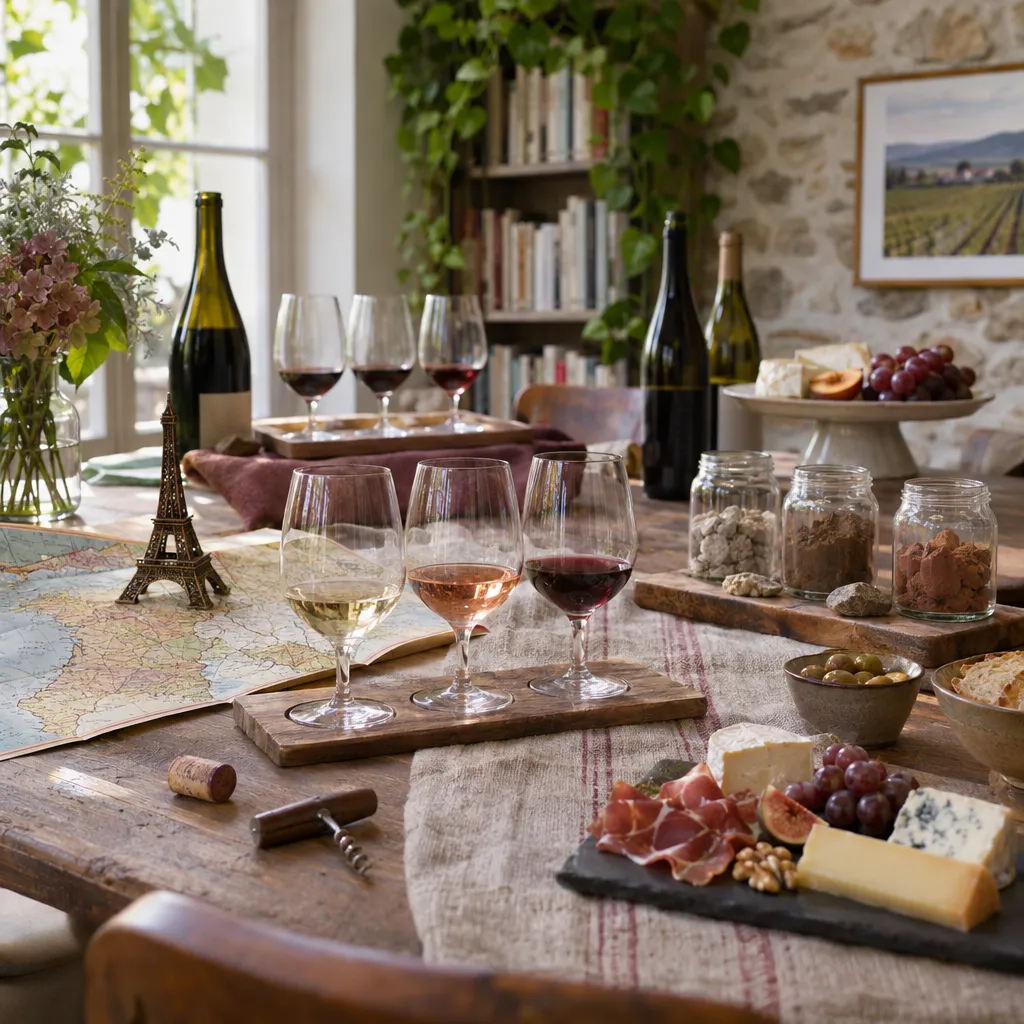
A great wine tasting party comes down to a simple theme, four to six wines that invite comparison, and a set of ground rules. Compare the same grape across regions, taste several vintages of the same wine, or serve the bottles blind: each theme gives guests a reason to compare, and comparison is what makes the evening interesting, even for beginners. Here are nine themes that work, with the wines to buy and step-by-step planning tips.
The essentials
- Four to six wines are enough for an evening; one bottle yields 12 to 15 tasting pours.
- Choose a common thread: a grape, a region, a vintage, or a single wine.
- Serve from lightest to fullest-bodied, whites before reds, and dry wines before sweet.
- Have water, bread, a spit bucket, and something to write on.
What themes should you choose for a wine tasting party?#
1. One grape, several regions
The ideal theme to start with. Taste chardonnay from Chablis, Côte de Beaune, Mâconnais, and Languedoc; or syrah from Crozes-Hermitage, Côte-Rôtie, and Languedoc. The same grape produces very different wines depending on the climate and soil: three glasses are enough to make the point.
2. One region, several appellations
Take a tour of the Loire in one evening: Muscadet, Vouvray, Sancerre, then Chinon or Saumur-Champigny. Or explore Bourgogne from north to south, from Chablis to Beaujolais. Guests leave with a mental map of the wine region.
3. The vertical: one wine, several vintages
Three or four vintages of the same wine, from youngest to oldest. This is the best way to see what time does to wine and to compare a warm year with a cool one. The perfect theme for opening bottles that have been resting in the cellar.
4. The horizontal: one vintage, several producers
The same vintage and appellation from three or four producers: for example, Saint-Émilion wines from the same year. This lets you compare the winemakers' work under equal conditions.
5. Blind tasting
Hide the bottles in aluminum foil or socks and number them. Everyone takes notes, then guesses the grape, region, or price. Slip an €8 wine in among €30 wines: the results are often surprising, and the conversation starts on its own.
WITH VINIOU Never forget a favorite again Record your tastings and track the evolution of your wines.6. Old World vs. New World
A sauvignon from Sancerre against a sauvignon from New Zealand, a pinot noir from Bourgogne against a pinot from Oregon. The differences in style, fresher on one side and riper on the other, are immediately apparent.
7. Food and wine pairings
Serve three or four simple dishes, each with two wines: taste the dish with one wine, then the other. Cheeses work particularly well: comté with a vin jaune and a red, goat cheese with a sauvignon and a pinot noir, or roquefort with a Sauternes. Viniou's food and wine pairings can suggest wines from your cellar for each dish.
8. Bubbles
Champagne brut, crémant de Loire, d'Alsace, or de Bourgogne, cava, prosecco: compare methods, grapes, and prices. Ideal for a substantial appetizer spread or a festive evening.
9. Cellar wines ready to drink
Everyone brings a bottle at its peak, or you open bottles from your own cellar that shouldn't wait any longer. A useful evening with no purchases needed: the ready-to-drink list in Viniou Premium sets the lineup.
A table to help you choose a theme#
| Theme | Wines to buy | Best for |
|---|---|---|
| One grape, several regions | 4 wines made from the same grape | Beginners |
| One region | 4 to 6 appellations | Beginners |
| Vertical | 3 to 4 vintages of the same wine | Wine lovers with a cellar |
| Horizontal | 3 to 4 producers, same vintage | Wine lovers |
| Blind tasting | 4 to 6 varied wines | Everyone, especially for a fun evening |
| Old and New World | 2 to 3 pairs made from the same grape | Curious tasters |
| Food and wine pairings | 2 wines per dish | Food lovers |
| Bubbles | 4 to 5 sparkling wines | Appetizers, celebrations |
| Cellar wines ready to drink | Bottles at their peak | Wine lovers with a cellar |
How do you plan the evening?#
Number of wines. Four to six wines for eight to ten people. Beyond that, the palate tires and it becomes hard to tell the wines apart. Allow 1.7 to 2 fl oz per tasting pour, or 12 to 15 pours per bottle, plus one extra bottle for the meal.
Serving order. Whites before reds, light wines before full-bodied ones, young before old, and dry before sweet. For a vertical, serve from youngest to oldest.
Glasses and temperature. If possible, provide one tulip-shaped stemmed glass per person per wine, or rinse glasses with water between wines. Take reds out an hour beforehand, and serve whites and sparkling wines chilled.
On the table. Water, unsalted bread, a spit bucket (a bucket or opaque pitcher will do), and a sheet for each person to record the wine's color, nose, palate, and a score.
Keep a record of the evening#
By the next day, it's easy to forget who liked which wine. Record each wine with its score and a few words: in Viniou, tasting notes stay on the wine's record, so you can find the ones you liked when it's time to buy again.
For each theme, find food and wine pairings suited to your cellar. After the evening, keep a tasting journal of your favorite wines.
Discover the Viniou app to manage your wine cellar.