A rare wine is best bought where its history can be traced: at the estate, from a wine merchant who knows its provenance, at an auction with an expert, or en primeur through an established négociant. Before paying, check the provenance, invoice, fill level, cork, and label, then store the bottle in good conditions and declare it to your insurer.
Key Takeaways
- The fewer hands a bottle has passed through, and the better documented its history, the lower the risk.
- At auction, add the buyer's premium to the hammer price, often 20 to 30%.
- Fill level, cork, capsule, and label reveal the bottle's condition and sometimes signs of counterfeiting.
- Keep invoices and photos: they serve as evidence for your insurer.
Where can you buy rare wines?
At the estate
This is the most reliable provenance: the bottle has never left the producer's cellar. The most sought-after estates sell by allocation, giving priority to longtime customers. To get an allocation, you often need to start with more accessible cuvées and return each year.
From a specialist wine merchant
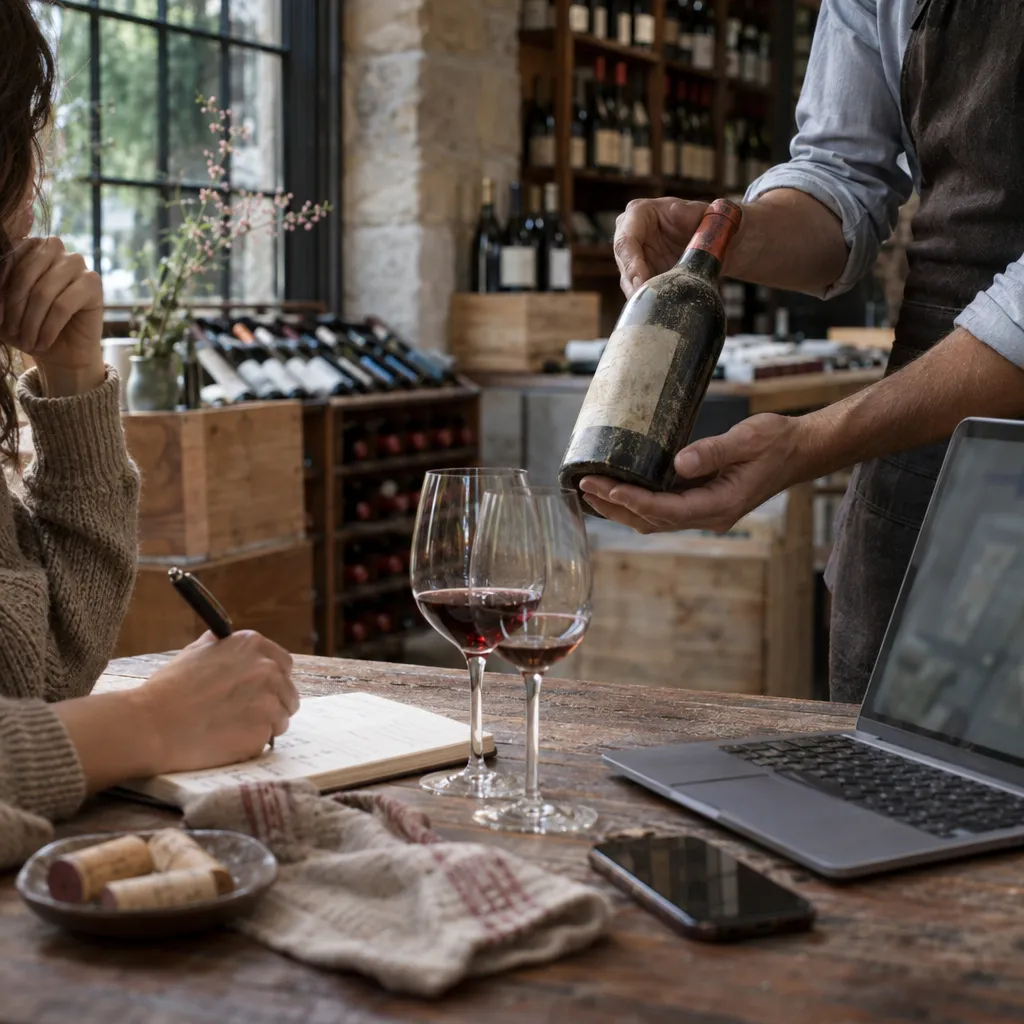
A merchant who works directly with estates or their distributors can tell you where the bottle came from and how it was stored. A reputable professional should have no difficulty answering this question.
At auction
Auction houses offer older vintages that are hard to find elsewhere. Read the catalog carefully: it lists fill levels, label condition, whether the original case is included, and sometimes the lot's provenance, such as a private cellar or an estate cellar. Don't forget the buyer's premium, which is added to the hammer price and often reaches 20 to 30%.
En primeur
Especially in Bordeaux, wines are sold in the spring following harvest and delivered about two years later. This lets you reserve limited quantities at the release price, but you are paying for wine you have not yet received: use a long-established négociant or wine merchant.
From private sellers
An old bottle without an invoice, stored under unknown conditions, is still a gamble. Insist on detailed photos and be wary of a seller who can tell you nothing about its history.
WITH VINIOU Know what your wine cellar is really worth The value of each bottle, tracked in real time.How can you check a bottle's authenticity and condition?
Counterfeiting mainly affects the most expensive wines. No single clue is conclusive: everything should be consistent.
- Provenance: a bottle kept in a single cellar, with its original invoice, is preferable to a lot that has been resold several times.
- Original wooden case: a sealed, unopened case is a good sign, especially for fine Bordeaux.
- Fill level: for a Bordeaux bottle, levels are described as in-neck, base of neck, high shoulder, and mid-shoulder. A slight drop is normal with age; a level at mid-shoulder or below most often indicates a cork that has let air in.
- Cork and capsule: many estates print their name and the vintage on the cork. A capsule that turns too easily, signs of seepage, or a raised cork should raise concerns.
- Label: check the print quality, typography, and paper. A pristine label on a forty-year-old bottle deserves a closer look.
Also be wary of a price well below market value, or large quantities of large-format bottles from an old vintage offered without explanation. Signs of wine damaged by heat or poor storage, such as traces of wine under the capsule or an unusual color, are detailed in our article on signs of improperly stored wine.
| Where to buy | Advantages | What to watch for |
|---|---|---|
| Estate | Impeccable provenance, release price | Scarce allocations, waiting times |
| Specialist wine merchant | Advice, potential traceability | Ask where the bottle came from |
| Auction | Older vintages, detailed catalog | Buyer's premium, varying condition |
| En primeur | Release price, reserved quantities | Payment well before delivery |
| Private seller | Sometimes attractive prices | Unknown provenance and storage |
Which rare wines are worth buying?
A rare wine is not always a great wine for aging. If you are buying to open in fifteen or twenty years, first consider the wine's aging potential. Our selection of wines to buy for a long-term collection helps you identify appellations and vintages to seek out.
How should you store and insure rare bottles?
A valuable bottle needs the same conditions as any other, but with less room for error: a stable temperature around 54°F, humidity close to 70%, darkness, and a vibration-free environment. The label also affects resale value; our tips for protecting labels in a wine cellar can help prevent mold and peeling.
For insurance purposes, a valuable cellar should be declared: many homeowners insurance policies cap coverage for valuables, and some insurers require an appraisal above a certain amount.
In Viniou, each bottle has a record with its purchase price, date added, and location, and the estimated value of the cellar and each bottle (Premium) gives you an up-to-date approximate value. It is an estimate, not an appraisal, but it is a solid starting point for a conversation with your insurer.
By Arnaud Cariou, founder of Viniou
Article written on 11/23/2026